
Technical support is the lifeline for businesses that experience critical IT issues weekly, ensuring they stay operational and competitive in today’s dynamic market. Almost any organization whose business is related to online activities involves some form of information and communication technology. Also, business expansion and development always require more serious technical resources. Businesses need to maintain a stable workflow at a new level and with new capacities. There is a need for staff to ensure the smooth operation of the online application and other services. We call such specialists technical support services.
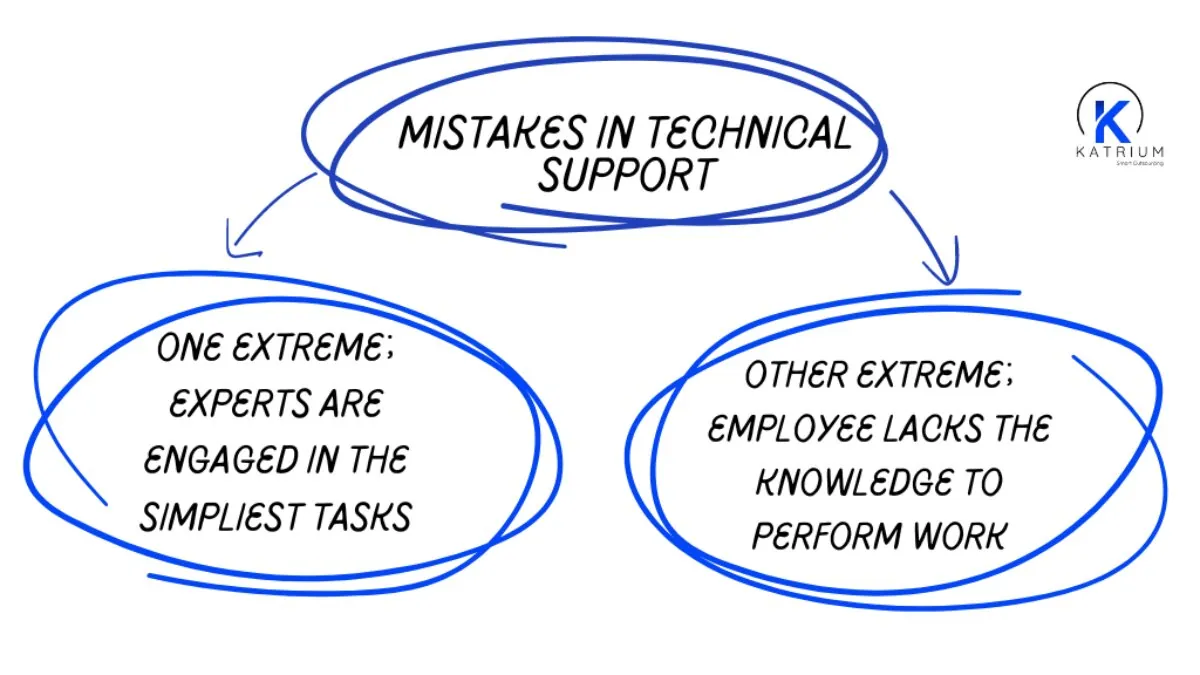
Mistakes in technical support
There is such a practice: the duties of providing support fall on the shoulders of one or several employees of the IT department, who already have quite a large working functionality. As a result, while doing support, a specialist does not have time to work on service upgrades. The second variant of the situation: managers assemble a separate team for support realization. In this case, difficulties may arise with the qualifications of new staff.
Today, support departments are no longer considered a luxury that only large holdings can afford. Medium-sized and even small businesses are coming to realize that without a reliable and high-quality technical support service, they will not be able to function properly and remain competitive in the market.
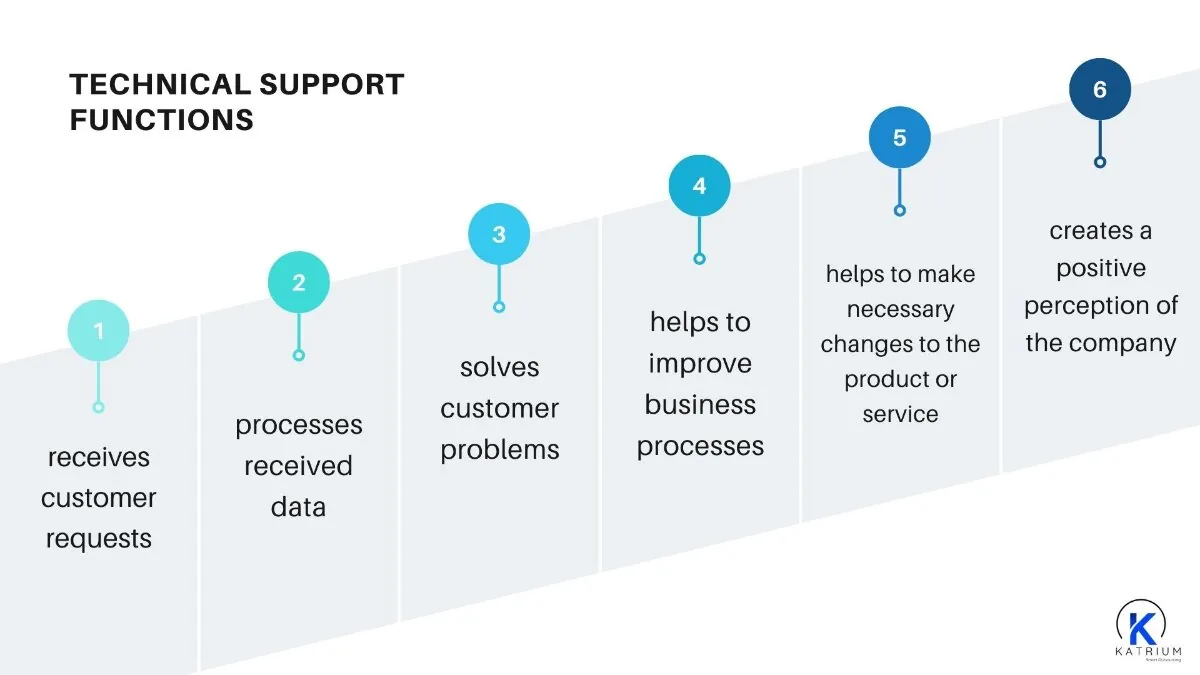
What functions does technical support perform?
Technical support receives, processes and solves customer problems and issues. Specialists collect information from users that helps prevent future problems, improve business processes and make necessary changes to the product or service. Quality support has a positive impact on the company’s reputation and customer loyalty. Accordingly, the number of repeat transactions and new customers increases. That is, companies need support service not only to solve problems that arise but also to create a positive perception of the company. In other words, technical support brings benefits to the company.

Support levels
Technical support has a certain structure, which consists of levels. Businesses need a layered structure to provide the best possible service: each specialist is competent at a certain level or support line.
Support lines perform different functions, and in different classifications their number can be different. Let’s talk about the classification that includes 3 support levels.
- The first line is the basic level of support, where specialists find out the problem or question of the client. This line collects basic information about the client. The specialists categorize the customer’s query and then forward it further.
- The second level is occupied by the specialists who can solve all the major problems that are encountered by the users. Employees of the second line of support have more technical knowledge and have a deeper understanding of how the product or service works.
- At the third level, complex problems that could not be solved at the first two levels are solved. Specialists of this line devote a large amount of time to the study of atypical problems. This level is usually considered to be the last one.
Dividing technical support into layers improves efficiency and speeds up work. But the greatest efficiency can be achieved with support automation, which we’ll discuss next.
Technical support outsourcing
As a business grows and develops, the number of technical support tasks also grows. This can cause requests to start getting lost, processing speed to decrease, and support itself to slow down. In other words, the quality of support will drop.
All this negatively affects the reputation of the company, so at a certain stage of business development many people think about outsourcing of the support. Do you need technical support for your business? We will do it for you, book a free consultation to see how can we technically support your business!