




Hiring individuals or companies from other countries to execute specific business tasks or the entire business operation is known as international outsourcing. Businesses often employ outsourcing to reduce costs. International outsourcing covers various tasks like production, client support, software development, administrative duties, and others. The technological advancements of recent years have made global communication and association easier than ever. The value of a company could hinge on the successful execution of international outsourcing. Reading and comprehending this blog post about international outsourcing will equip your business with the necessary tools. It will help you boost competitiveness beyond the domestic market.
Outsourcing: historical context and evolution
Back in the 16th century, wealthy British landlords began sending clothing production overseas to India to save money on raw materials and labor costs. This is considered the first example of the modern concept of outsourcing. Other nations soon followed those means and established a system of outsourced manufacturing jobs and markets. Late in the 20th century, the outsourcing trend gained popularity among multinational businesses. The goal was to reduce outlays without sacrificing product or service quality. Today, outsourcing has become popular as corporations compete to get the operation rights of resources in different countries.
Nowadays, according to Deloitte and Grandview Research, “Global spending on outsourcing is predicted to hit $1,138 billion by 2025. Breakdowns include $573.6 billion for ITO, $235.5 billion for BPO, and $329.7 billion for shared services, highlighting how integral outsourcing is to modern business strategies and operations.”
Types of outsourcing
- IT outsourcing: One of the most popular services today. IT outsourcing is when a corporation contracts out a certain IT service provider to take care of all or part of a business’s IT needs. They range from software development to maintenance and support. Website development, cybersecurity activities, and technical support are among the most popular examples of IT outsourcing.
- Manufacturing outsourcing: is usually industry-specific. It involves contracting with a third party to produce goods or services typically handled by the main company. Manufacturing the windshields and ceramic brake discs are examples of outsourcing by automobile manufacturing facilities.
- Business process outsourcing: Process-based outsourcing involves contracting with external third parties to achieve specific tasks for the main company. Contracting with business process outsourcing services can solve the issue when a company lacks sufficient crew or skilled staff for marketing, payroll, HR, customer service, or supply chain management. Outsourcing these functions allows the company to maintain operations effectively.
- Project outsourcing: project-based outsourcing involves contracting with third parties to manage the project as a representative of the main company. When a company doesn’t have the funds to acquire vehicles to distribute its products, outsourcing logistic services could solve the problem. Logistics and legal services are examples of project outsourcing.
Benefits of international outsourcing
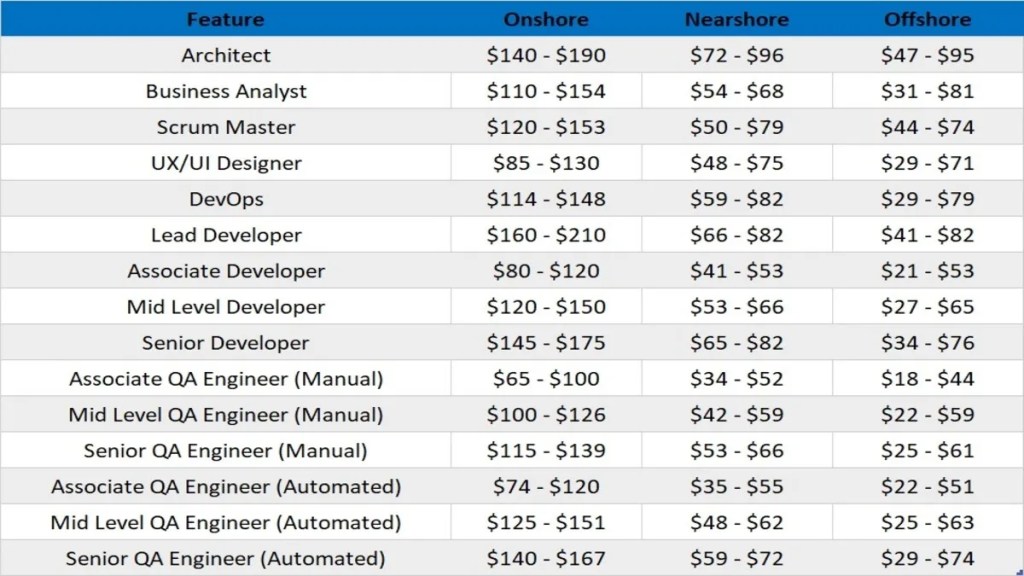
- The main goal of outsourcing is to minimize costs. This is achieved by transferring the production of specific products or services to areas where raw materials and labor are more affordable. Dividing the business into departments and outsourcing them to specialized corporations saves time and investment. The table below shows the difference in cost of particular occupations in the USA, near the USA, and offshore, according to Hatchworks.
- Access to Global Talent: Outsourcing provides access to specialized talent, saving time and costs compared to developing in-house expertise.
- Scalability and Growth: Outsourcing is a groundbreaking factor for business growth. It offers unbelievable adjustability, thus providing high ground for your business. For example, companies can save an average of $87,012 annually by outsourcing; that’s approximately 85% savings, according to Jjoingenius.
- Flexibility and Risk Minimization: Outsourcing reduces supply chain disruptions by using multiple suppliers to handle market demand fluctuations. Establishing outsourcing partnerships with conventional companies will alleviate the need to start from square one to obtain the service. You can terminate the agreement according to its terms once it becomes unhelpful to your business.
Potential risks of international outsourcing
- Language barriers: The desire to discover market opportunities in different countries may encounter some obstacles. The first is the need for a common language to interact with potential new partners. Some corporations tend to hire staff who are native to the language or work with translating third-party businesses.
- Social and cultural variances: Adapting to regional business practices is crucial for effective outsourcing. Certain cultures might be more reserved and less open to feedback than what you’re used to in your own community. To avoid misperceptions, it’s important to follow efficient ways of defining and clarifying deadlines, KPIs, or any concerns you have.
- Digital security: When outsourcing, you could be sharing your company’s confidential information and internal data with your outsourced partner. To minimize this risk, it’s recommended that businesses invest in in-company data security services and develop strategies to protect their digital assets. Ensuring that your outsourcing third-party agencies work with chosen providers of robust cyber security measures is the first step to lowering any possible data security risks.
- Legal issues: Before international outsourcing, it’s important to have solid research about taxes, employment, and international trade laws, and regulations in the desired country. However, having a partnership with a professional employer organization (PEO) can handle all legal complexities regarding outsourcing arrangements.
Is international outsourcing right for your business?
While some corporations will greatly benefit from outsourcing, others might not fully employ the benefits and would be better off considering different scaling strategies. Outsourcing can be valuable, but it’s crucial to weigh the benefits and risks specific to your business before moving tasks offshore. After all, for successful outsourcing, choosing the right outsourcing partner, effective communication and collaboration tools, establishing clear contracts and service level agreements (SLA), and continuous monitoring and feedback help you build a good strategy for successful outsourcing.
The Advantages of Outsourcing in a Demanding Market
In our accelerating market system, meeting all the requirements to get your job done has become increasingly difficult due to market demands and legal regulations. Making partnerships with expert and within-the-field businesses could save a lot of your time and expenses to deliver your requirements. In the subject of outsourcing, with technological, communicational, and industrial development in the last century, many new departments have arisen. So, instead of struggling with new markets, benefiting from supply chains and outsourcing to specialized corporations is a smart move.
Conclusion
The most common areas of outsourcing are IT, manufacturing, business processes, and project management. Outsourcing can help save your corporation’s budget, access worldwide expertise, ensure traceability and scalability, and reduce risks, making it a worthwhile strategy to consider. To succeed in international outsourcing, overcome communication barriers, embrace cultural diversity, ensure digital security, and understand local laws and regulations.
Katrium has already researched market conditions, communication channels, and regulations in several countries, including but not limited to Estonia, Spain, Finland, and Norway.
Do you have any concerns about international outsourcing? Don’t hesitate to get in touch with us or check our background to get to know us.


2 Responses