
Consumer research is the key to an informed marketing strategy. However, why do some companies collect huge amounts of customers’ data but still fail to turn them into marketing decisions? This happens when they still rely on assumptions about market trends instead of interpreting the data they already have. The problem here is not about data collection but rather data interpretation.
To define briefly, consumer research (or customer research) is about gathering customers’ insights that could help with business strategy. This includes marketing decisions. It helps us understand consumers’ motivations, preferences, needs, and purchasing behaviors. This data needs to be interpreted correctly in order to be useful in business decision-making.
What consumer research actually tells marketers
While conducting multiple research and collecting different types of data, businesses have to understand that they are used for various aspects of marketing.
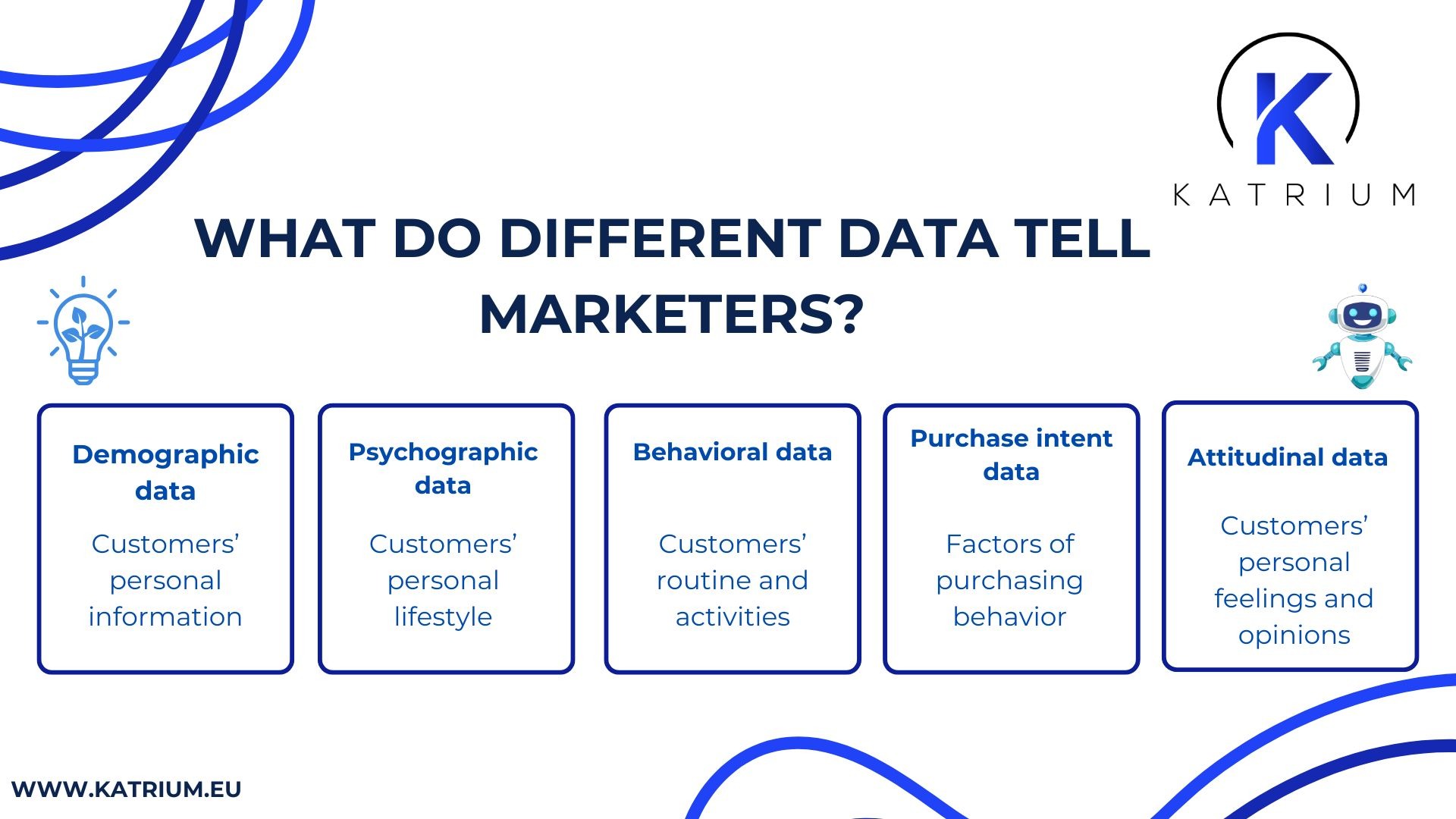
- Demographic data: Demographic data involves customers’ personal information such as age, gender, income, and location. It helps businesses to define target audience segments based on specific characteristics. For instance, certain age groups prefer different marketing methods compared to others.
While this data is useful in understanding groups of individuals, it does not explain why or what people like about your products. Thus, complementary data is needed.
- Psychographic data: This data refers to customers’ motivations, personal interests, and lifestyle. It allows businesses to comprehend the emotional and psychological aspects of their purchasing decisions.
Interpreting this data correctly will help in shaping a brand’s tone and messaging in marketing, such as positioning themselves as luxury, practical, or sentimental brands. Customers will associate brands with specific characteristics that influence their purchasing behavior.
- Behavioral data: Behavioral data reveals consumers’ routine and usual actions. In the marketing aspects, this helps in showing their browsing patterns, number of advertisements clicked, and online purchasing frequency. Understanding customers’ behavior will also help predict their future actions.
Integrating this data with demographic and psychographic data helps to optimize marketing campaigns for more efficient marketing strategy. These actions show which marketing channels are preferred and drive conversions.
- Purchase intent data: Acquiring purchase intent data enables businesses to understand customers’ reasons and factors that affect their purchasing behavior. This helps marketers to estimate their cycle of purchasing and page visits. This information is the key for knowing suitable campaign timing and product prioritization.
- Attitudinal data: This data is about customers’ opinions, perspectives, and feelings towards businesses. It is about what they feel towards certain products, services, and brands. It helps marketers to understand consumers’ personal views and what factors actually influence their decisions.
While psychographics focuses on broader data such as customers’ general preferences, values, and lifestyle, attitudinal data narrows it to their perceptions of specific products, brands, services, or topics. Marketers are able to alter their opinions on message delivery and content visualization.
Consumer research methods and when to use them
Different kinds of data are gathered using different techniques. When conducting research on particular kinds of data, it is crucial to employ the appropriate methodology. Every piece of information is used to support and validate the others.
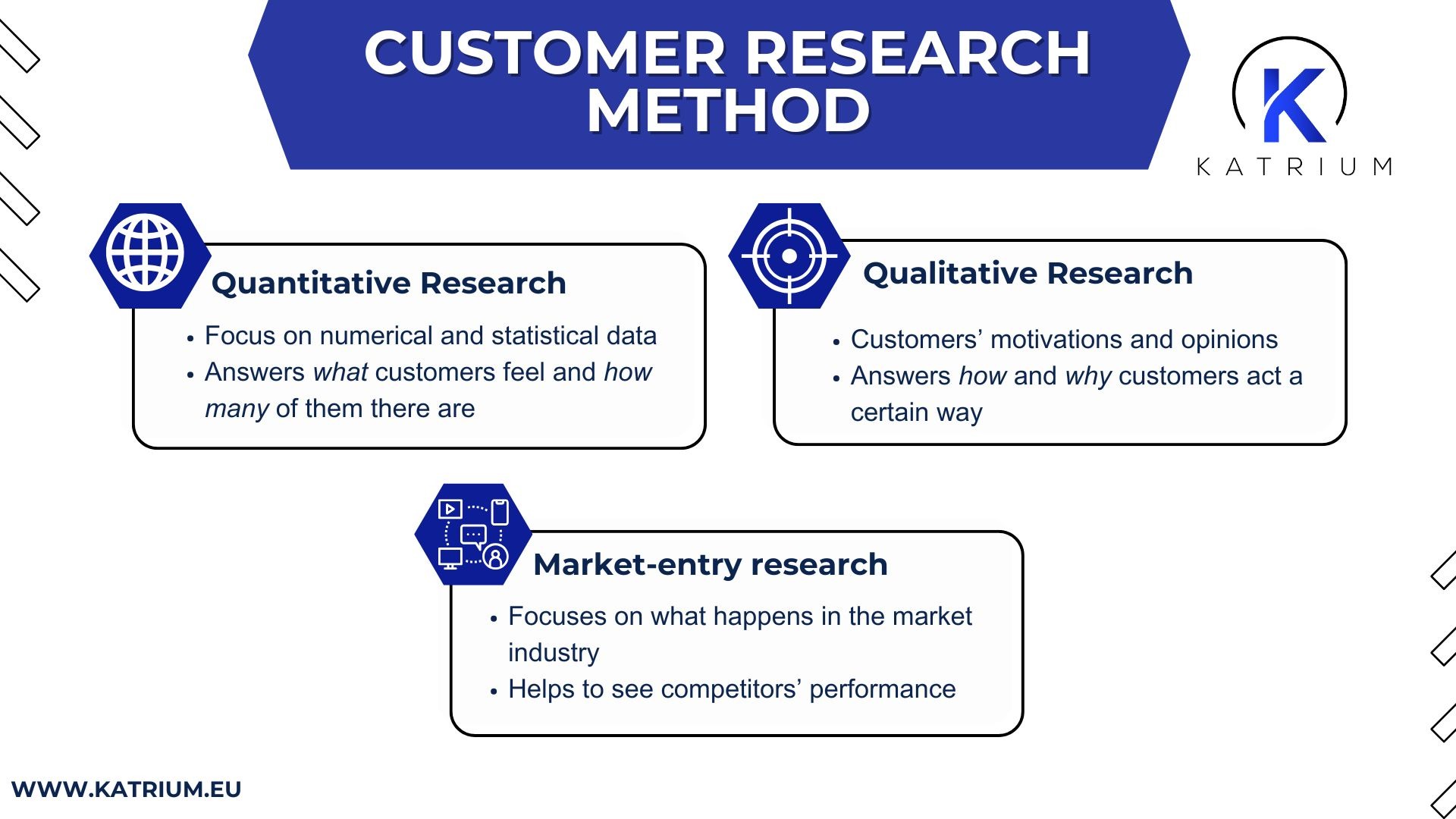
- Quantitative methods: Quantitative research focuses on numerical and statistical data about customers’ satisfaction and opinions. It explores what customers feel and how many of them there are.
- Surveys are used to measure satisfaction, see general preferences, and test product ideas from a large number of customers. This is very useful when businesses need comparable data from huge-scale audiences.
- Behavioral data shows customers’ daily actions. Businesses could identify patterns and predict upcoming trends from their digital behavior. This information further helps in measuring campaign performance and personalizing marketing materials to the majority’s preferences.
- Qualitative methods: Qualitative methods involve non-numerical insights, including customers’ opinions, motivations, and experiences with businesses. It helps companies understand why customers think or act a certain way.
- Interviews are one-on-one conversations between researchers and customers. They are very useful to explore customers’ personal experiences in-depth and understand their reasoning in purchasing decisions. Researchers could also discover their personal perspectives on marketing methods used by businesses.
- Focus groups involve six to ten people discussing a product, brand, or business concept. This method helps to uncover shared opinions, different perspectives, and emotional reactions from customers.
- Observation includes watching how customers behave in real environments. It exposes their daily habits and points out issues that customers might not be aware of. The data gained could be compared to what customers had said to find the optimum solutions for business decisions.
- Market-level method: Market-level research is very crucial to understand the industry that businesses are competing in. It focuses more on what happens in the market you are competing in instead of what happens around your business.
- Syndicated research refers to pre-collected market data that is sold to multiple companies. It offers wider industry insights, including market trends, competitors’ performance, and category benchmarks. This helps businesses to understand the overall market condition rather than their own customers’ behaviors.
How to turn insights into actions?
Conducting proper research and collecting customers’ data are the first steps. To create true value from the information, businesses need to interpret the research findings into marketing decisions that could address customers’ needs and preferences.
Insights from customers can influence multiple aspects of marketing. This includes customer segmentation, product positioning, content designs, and campaign timing. A general framework for this could be:
Insights → Interpretation → Action → Outcome
To illustrate, imagine a business is conducting quantitative research through distributing surveys to target audiences. The survey may reveal that customers think a product is too expensive. Instead of adjusting prices or product development, marketers could use this insight to alter messaging. For instance, instead of focusing on product designs or features, the content delivery could emphasize more of the product’s benefits and long-term values.
The messages influence what people think about the product; thus, marketers could convince customers that the product is worth the price through good delivery. The outcome then can be measured through conversions, sales performance, and engagement rates.
Interpreting insights into the right actions will help businesses to operate efficiently by saving both time and incentives.

To help you understand better, here is the explained framework:
- Insights: Research findings could be collected through surveys, interviews, and other research methods. This information is very important for businesses to understand their audiences as well as the industry they are competing in.
- Interpretation: The data needs to be identified and segmented to acknowledge customer needs, preferences, and pain points.
- Action: Interpreted insights can be translated to marketing decisions. The interpretation will help change the message delivery to influence audiences’ perspectives.
- Outcome: The final outcome should be measured to evaluate whether the changes in marketing improved overall business performance.
Common mistake in consumer research and marketing
There are several common mistakes that businesses make when handling customers’ data or conducting research. These could affect business decision-making and result in undesired outcomes.
- Not using the data collected for marketing purposes: Gathering data without maximizing its value is one of the most frequent errors made by businesses. Companies may make huge investments in research but ignore them in marketing decisions.
Take the previous example about price complaints; some businesses will approach differently, like degrading product quality or mass-producing for cheaper prices. While different approaches are applicable, maintaining product quality through marketing influence will protect the brand’s reputation and customers’ satisfaction.
- Over-reliance on customers’ statements: While surveys and interviews offer great insights into perspectives and motivations, they do not show customers’ true actions and activities. Businesses could combine multiple resources of data to track users’ purchasing behavior and uncover unmentioned factors of their purchasing decisions.
Multiple resources of data represent more accurate insights for businesses to improve on their development and marketing.
- Reliance on outdated research: Preferences, market trends, and purchasing behaviors change over time; thus, companies need to conduct customer research regularly. Relying on old data would risk making decisions based on information that no longer reflects customers’ needs.
Continuous monitoring of market changes will help businesses to maintain effective marketing strategies and decisions.
- Ignoring data interpretation: Focusing on data collection rather than interpreting it into decision-making will waste businesses’ investment. More information about customers does not always lead to better decisions. Companies have to interpret and apply the insights according to future business plans.

Conclusion
Consumer research is a crucial element in marketing strategies. It helps businesses to understand customers’ perspectives and behaviors and integrate marketing decisions based on their preferences. However, the insights gained are only valuable if companies know how to interpret and implement them.
By conducting multiple research methods and collecting different types of data continuously, businesses could monitor customer needs and develop marketing strategies accordingly. This will improve overall customers’ experiences and maximize the usefulness of data gained.
How Katrium can help
At Katrium, we help businesses to conduct market research to explore their customers and market industry better. Katrium provides comprehensive and thorough research methodologies that cover numerous industries worldwide.
In addition to market research, with more than 20 years of experience, we also offer content creation and digital market research for businesses.
Take the opportunity to work with us to extract insightful information from your clients and turn it into a powerful innovation for your company!