





Introduction
The types of data to collect in customer service are crucial for improving customer satisfaction and ensuring business success. Customer service is one of the most essential fundamentals of a successful business. Its critical role lies in attracting new customers and retaining existing ones. When new customers need help or advice—for example, to determine which services would best suit their company—customer service steps in. They assist and advise customers, introducing them to the business and piquing their interest.
For existing, reliable clients, exceptional customer service is equally important. Suppose a client is dissatisfied with certain services and considers switching to another company. In such cases, excellent customer service can swiftly resolve the issue. Sometimes, the client may even receive a discount as an apology. This ensures that the company retains their loyalty.
Recognizing the Value of Data in Customer Support
Role of Data in Customer Service
- Optimize customer service strategies with data-driven insights.
Benefits of Data Collection
- Enhance customer satisfaction and loyalty.
- Improve service efficiency and effectiveness.
- Personalize customer experiences.
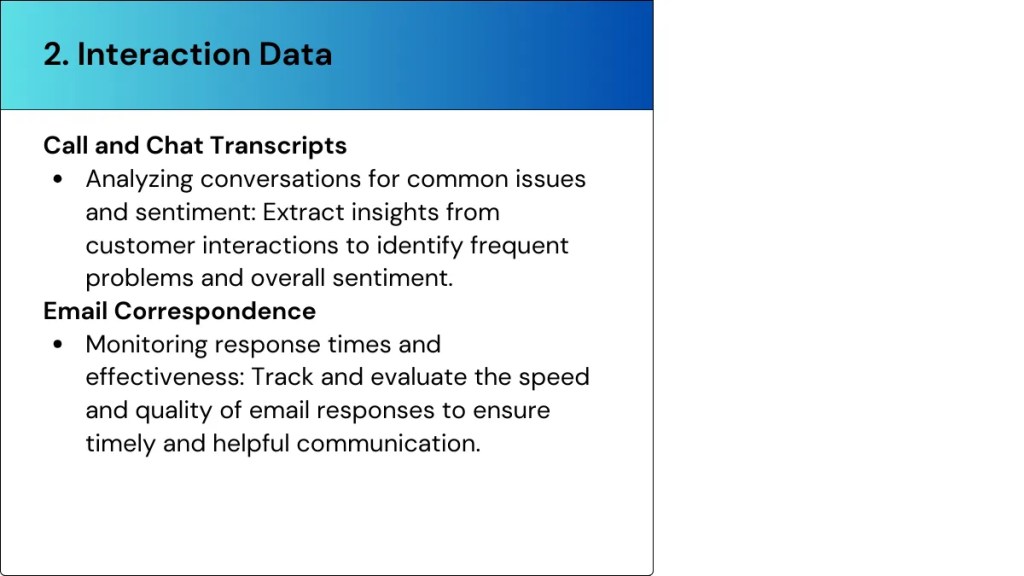
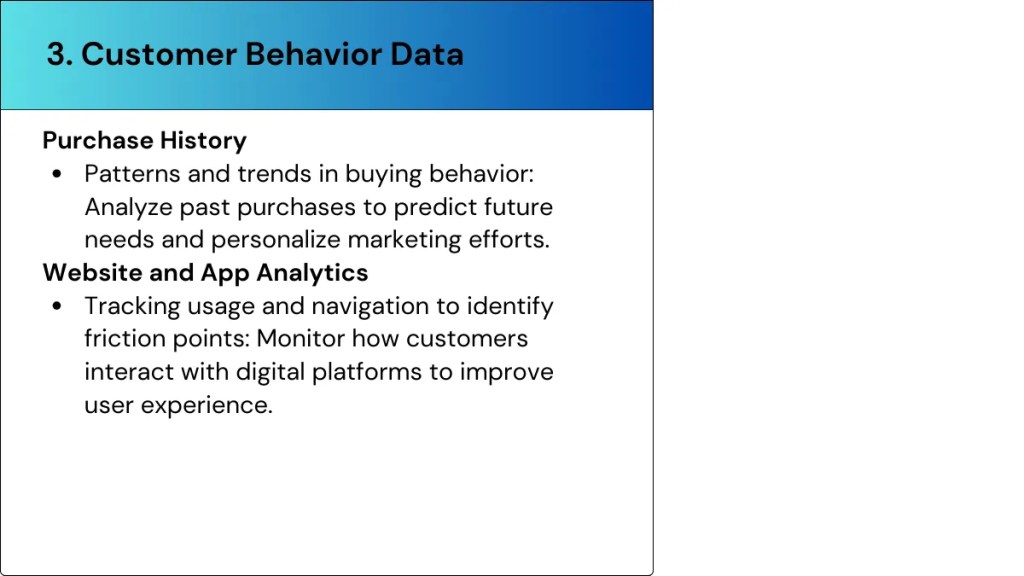
Key Types of Data to Collect in Customer Service



Effective Tools and Techniques for Collecting Data
Data can be collected in many different ways. Let’s focus on the most accessible data collection methods and survey tools. The easiest to use is Google Forms; it is accessible on all browsers, and all you need to set up is a Google account. Google Forms offers various customization solutions, ranging from background color to fonts. In Google Forms, you can choose from several question types, such as open-ended, multiple-choice, and image questions.
Every business should be aware of ethical concerns. Before clients fill out customer surveys, it informs them that their information is confidential and will not be disclosed to third parties. This ensures customer safety and maintains their trust.
Analyzing and Applying Data in Customer Service
After gathering types of data in customer service, the next step is to analyze and apply this information effectively. A combination of techniques, such as statistical analysis for quantitative data and theme analysis for qualitative insights, helps to analyze both quantitative and qualitative data. These fundamental techniques aid in identifying correlations, patterns, and trends in the data.
Here at Katrium, we have successfully improved customer satisfaction through data collection and analysis.

Conclusion
The value of data in the dynamic world of customer service cannot be overemphasized. Identifying the essential types of data to collect in customer service is the first step toward understanding and meeting customer needs more effectively.
- customer feedback
- interaction data
- behavior patterns
- demographic information
- service performance metrics
By analyzing the data listed above, businesses are able to transform insights into practical plans that improve client loyalty and happiness. By following best practices and using useful tools, it is possible to maintain ethical and efficient data collection while protecting client privacy and yielding useful information.
In conclusion, a data-driven approach to customer service results in notable enhancements to the customer experience and service quality. By putting this article’s recommendations into practice and concentrating on the right types of data to collect in customer service, businesses will notice positive changes leading to long-term success.
For expert assistance in collecting and analyzing customer service data, visit Katrium’s website and contact us today.