Campaign research is the critical first step in launching any effective marketing or political campaign. In this guide, we explore its importance, methods, tools, and best practices in depth.
Campaign research starts with clearly defining the objectives. What is the campaign’s goal-raising brand awareness, generating leads, or winning votes? Establishing these objectives guides every subsequent research decision and ensures your strategy aligns with measurable outcomes.
Why Campaign Research Matters
Campaign research ensures you understand your audience’s needs, behaviors, and preferences. At Katrium, we recognize that market insights are invaluable in crafting messages that resonate. Proper research reduces risk, optimizes budget allocation, and sharpens campaign focus. One key term often sought after is target audience analysis—a process of dividing a broad consumer or voter base into precise segments. You can read more about effective audience analysis here: Audience Analysis Overview.
Key Components of Campaign Research
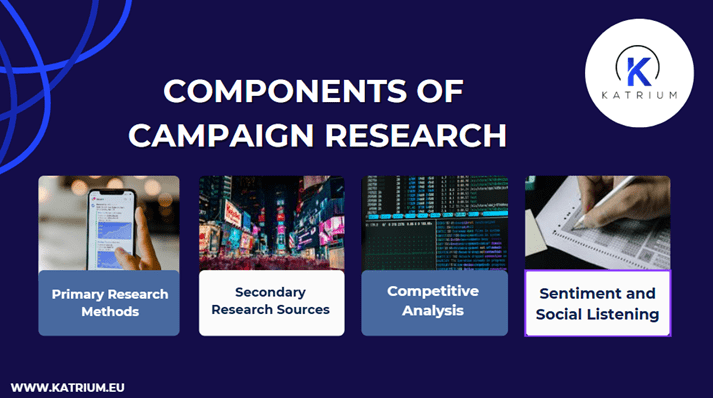
- Primary Research Methods
- Surveys and questionnaires
- Focus groups
- In-depth interviews
These methods help gather firsthand data from your target segment.
- Secondary Research Sources
Utilize public reports, industry articles, academic studies, and existing data. For example, a few research centers offer robust insights into consumer behavior trends. This complements primary data, adding depth to your analysis. - Competitive Analysis
Assess your competitors’ campaigns. What worked? What didn’t? Tools like SimilarWeb and SEMrush can reveal competitor traffic, keywords, and engagement strategies. - Sentiment and Social Listening
Monitor social media conversations, forums, and review platforms to gauge public opinion and sentiment trends related to your brand or topic.
Campaign research is key to each of these components, as it ensures your efforts are data-driven and audience-focused.
Tools and Platforms
- Google Analytics & Trends — track user behavior and trending topics.
- SurveyMonkey and Typeform — design and distribute surveys seamlessly.
- BuzzSumo — discover popular content and influencers.
- Qualtrics and SPSS — advanced tools for detailed data analysis.
- Social listening tools, such as Mention or Brandwatch, monitor brand sentiment.
At Katrium, we often leverage Google Analytics and its workshops to empower clients with actionable insights.
Step-by-Step Campaign Research Process
1. Define Objectives & KPIs
Understand what you want to achieve. Example KPIs include impressions, click-through rate, conversions, and brand sentiment.
2. Identify Target Audience
Use demographic and psychographic profiling. Segmentations — such as age, income, interests, and location — reveal audience clusters you can tailor for.
3. Choose Research Methods
Determine whether you require quantitative data (e.g., surveys) or qualitative insights (e.g., focus groups).
4. Collect & Analyze Data
Use statistical tools to interpret results. Identify patterns, trends, and gaps.
5. Develop Messaging & Creative
Use insights to craft your creative approach. Conduct A/B testing to refine ads or copy.
6. Execute & Monitor
Launch the campaign. Continue to track KPIs versus goals. Adjust bidding strategies, content, or channels based on performance.
7. Report & Iterate
Document findings, evaluate success, and use lessons learned to inform future campaigns.
Campaign Research: Challenges and Pitfalls
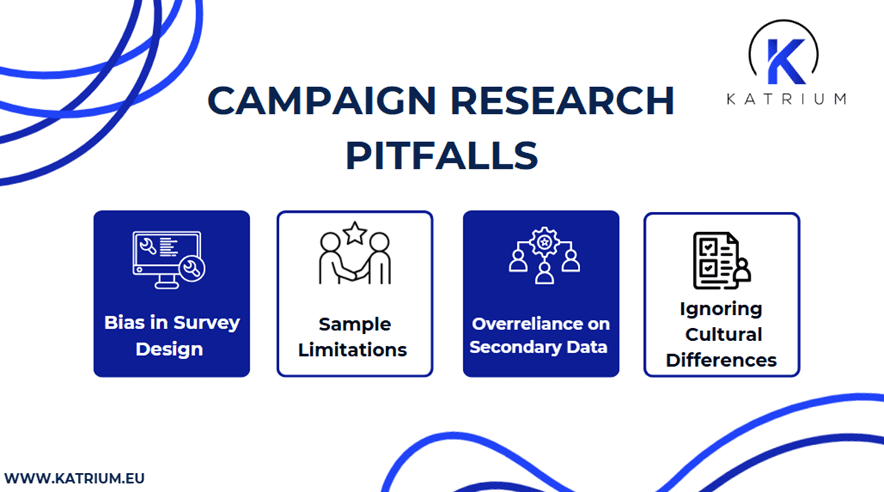
- Bias in Survey Design — Poorly worded questions can distort responses.
- Sample Limitations — A small sample may not represent your broader audience.
- Over-reliance on Secondary Data — Insights may be outdated or irrelevant.
- Ignoring Cultural Differences — Campaigns targeting diverse audiences must reflect local norms and values.
Integrating Campaign Research with Digital Channels
- SEO research helps shape landing page copy and PPC keyword strategies.
- Email marketing campaigns rely on research to segment mailing lists and personalize offers.
- Social media content is guided by sentiment analysis and trend tracking.
At Katrium, we integrate campaign market research into clients’ digital marketing strategies—optimizing across websites, email, SEO, and social media for consistency and impact.
Measuring Campaign Research ROI
- Pre‑Campaign Benchmarking
Measure baseline awareness, sentiment, and conversion rate. - Post‑Campaign Evaluation
Compare KPI shifts. Analyze ROI per channel, message, or audience segment. - Lifetime Customer Value (LCV)
Evaluate if the campaign attracted high-value audiences who convert over time.
Campaign research ensures every euro spent is justified with data.
In connection with our broader services, you might explore Katrium’s articles on Marketing Content Strategies and Audience Segmentation Best Practices for deeper dives into related topics.
Advanced Campaign Research Techniques
- Predictive Analytics – Using ML to forecast audience behavior and optimize targeting.
- Attribution Modeling – Identifying which touchpoints drive conversions.
- Geo‑Targeted Research – Tailoring campaigns to specific areas based on local insights.
These advanced approaches help refine campaign performance and ROI.
Conclusion
Campaign research is the backbone of any strategic campaign, ensuring effectiveness and precision. We at Katrium believe that Campaign research delivers clarity, focus, and measurable impact, transforming marketing initiatives into successful successes. By investing in robust research, aligning with objectives, and iterating based on data, brands and political campaigns can connect meaningfully with their audiences.
In sum, effective Campaign research empowers decision-making, reduces waste, and drives success. The depth of insights you gain will shape your messaging, drive conversions, and deliver ROI. We at Katrium look forward to helping you harness the power of market research to elevate your campaigns.
For more insights, reach out to Katrium & contact us to explore our service offerings.