Social media influencer marketing is on the rise. It has recently become one of the most effective ways to promote businesses. When done successfully, it helps reach the target demographic faster and ends in stronger customer relationships than traditional ways of marketing. However, doing so requires the right strategy. While brands are trying to reach a larger target audience on social media, if they do not approach this correctly, the results may be unexpected or disappointing.
What is Social Media Influencer Marketing?
Social media influencer marketing is a form of marketing where businesses collaborate with online “influencers” to promote their brands. Influencers are a new phenomenon in the social media landscape. These are people who have a lot of following and usually focus on creating a specific type of content. They occupy a particular niche and provide the watcher with entertainment in line with their online persona.
Influencers build trusted relationships with their social media followers, and these relationships between the creators and the audience are what influencer marketing relies upon to work. Their followers value the opinion of the influencers, enabling brands to connect with consumers by getting the “seal of approval” of a trusted person. According to 2025 Sprout Social Influencer Marketing Report there are 86% of consumers who make a purchase inspired by influencers at least once a year. This showcases how potentially effective this type of marketing may be.
How does social media influencer marketing help businesses grow?
There are multiple ways influencer marketing can contribute to business growth:
- Reach new and wider audiences: Influencer marketing can help expand brand visibility. They can create content appealing to audiences who, before, were not aware that you exist.
- Target specific niches and ideal customers: Influencer marketing helps to reach niche and specific demographics.By collaborating with influencers creating a particular type of content (focused on food, makeup, or fashion), your business can find an audience with guaranteed interest in what you have to offer.
- Build trust, credibility, and authenticity: Influencers build strong connections with their followers through personal experiences and opinions. They promote products that work best for them. This is why their followers trust and relate to them more than traditional ad marketing. So, being endorsed by a trusted influencer can show the audience your brand has genuine value and not just a marketing budget.
- Increase engagement through creative content: Your brand can benefit from the creativity that influencers bring. They know how to create natural and engaging content to attract their followers’ attention. This can bring more interest to your product and help it stand out among the rest.
- Grow presence on new platforms: Influencers use multiple platforms to present themselves. You can save time by letting them promote your brand on social media where you may have little or no presence. This can be more effective than learning the nuances of every platform yourself.
- Drive sales and conversions: Influencer marketing can have a major influence here. 49% of consumers purchase products once a month based on influencers’ posts (as per 2025 Sprout Social Influencer Marketing Report).
- Strong market growth and efficiency: Millions of active social media users increase influencer marketing growth. As more brands are investing in influencers as a marketing channel, the global influencer marketing value is estimated to reach 32 billion US dollars in 2025.
Key Challenges of Social Media Influencer Marketing
There are several key challenges that you need to take note of:
- The relationship between brand and influencer: Influencers become your unofficial brand ambassador. Partnering with influencers means that social media users associate your brand and product with them. Their public actions can affect their reputation, and yours as well. It is important to look for a suitable and responsible public figure to maintain your brand’s image.
- Follower count versus engagement: Focusing on influencers’ follower count instead of actual engagement will not help your marketing be successful. Some huge influencers have fewer interactions with their followers compared to micro-influencers. A smaller following makes it easier for influencers to engage in interactions like liking and replying to their followers’ comments. This makes their interactions feel personal and boosts the weight their opinion holds to the audience.
- Higher cost for famous influencers: Influencers with high engagement rates and follower counts will charge more. Sometimes, the cost is higher than advertising traditionally (through social media ads, billboards, or posters).
- Wrong audience demography: Choosing the right influencers is important as their followers represent your future potential customers. Marketing to an audience that has no use for what you have to offer is futile. Unsuccessfully marketing to a new audience can also muddle the brand’s image and discourage loyal followers.
- Lack of honest and authentic reviews: Influencers who want to maintain a good relationship with all brands give good reviews without genuine product testing. This may backfire when the reviews do not match the customers’ expectations, resulting in both brand and influencer losing credibility.
- Changing social media algorithm: The social media algorithm changes constantly.. The posts go viral or receive high engagement based on the current algorithm trends. Content can go viral, but this fame is always short-lived. So, it is important to collaborate with influencers who understand the algorithm and have experience adapting to it.
Influencer marketing strategy: How to make it work?
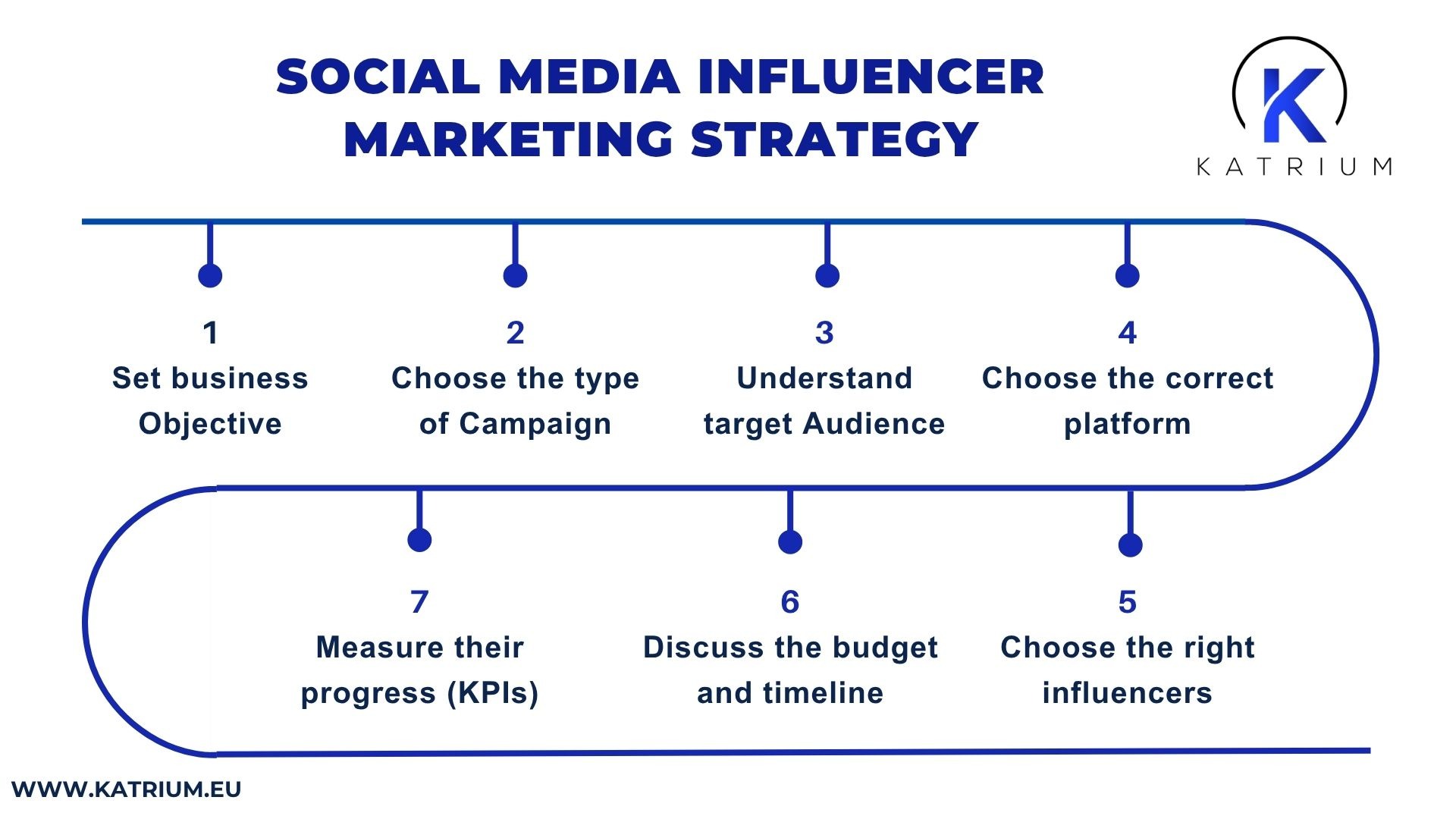
There are several strategies that you can follow in order to achieve successful influencer marketing:
- Specific business objectives: Setting a specific objective is important to ensure the influencers’ content can help you reach the business goals. You need to think of what you want to achieve through the collaboration: expanding the market, gaining more sales, or going viral.
- Type of campaign: After setting a specific objective, you need to choose the right type of campaign. There are multiple campaign varieties with different focus such as sales conversion, brand awareness, or product launch. This relates to, and should be done accordingly to, the business objectives.
- Target audience: Collaborating with an influencer means you are attracting their followers as your new potential customers. So, it is important to understand what type of content the influencer does to evaluate their followers as your target group.
- Type of influencer: Reach out to the right influencer. There are different types of influencers, ranging from micro-, mid-tier, macro-, and mega-influencers. They are differentiated based on their numbers of followers.
It is important to note that more followers do not equal more engagement. In fact, businesses often choose to collaborate with micro- and mid-tier influencers over those with larger audiences. Smaller influencers often have more sway over their followers due to closer, more personal relationships.

- Platforms: Choose a particular social media platform to focus on. Although influencers can promote your service or products across many platforms, it is important to keep a focus on one specific social media platform. This is to ensure you are advertising in the correct algorithm and reaching the people interested in your content. If many people look for house rentals on Facebook and makeup tutorials on TikTok, that’s where the related advertising should be.
- Budget and timeline: Set a budget limit and specific timeline. The budget must be within both business and influencer expectations. The timeline must be achievable to maintain a good partnership.
- KPIs: The influencer’s progress needs to be measured to ensure consistent engagement.
Scaling influencer marketing: How to grow it?
Making influencer marketing work is one thing, growing it as a marketing channel is another. To grow the social media influencer marketing channel, businesses should:
- Organize multiple campaigns at one time to influence the algorithm.
- Expand into a new market through influencer marketing. Integrating marketing into content people are already consuming is more effective than ads, which many find disrupting.
- Collaborate with multiple influencers. Keeping the pipeline open for new faces and audiences ensures growth potential.
- Set up standards for all influencers to follow and achieve.
- Have clear and structured performance indicators to help you track results
- Take advantage of automation and outsourcing.
How does outsourcing help in social media influencer marketing?
Here at Katrium, we offer the outsourcing service of market research and social media management for those who feel they are too busy to handle marketing. Through the market research, we could help find the best influencers for you to collaborate with.
Katrium also offers services for managing campaigns through communication, coordination, and global multilingual outreach. Contact us and make the most of the current marketing changes!