
Linguistic Diversity in Customer Interactions is an essential tool for building trust, improving the customer experience, and strengthening customer loyalty. With the rise of globalization, communicating with customers in their native language is no longer just a bonus; it’s a fundamental part of creating a strong, high-quality relationship. Speaking the customer’s language not only makes communication easier but also strengthens ties with local communities and provides a better response to their needs.
This is particularly relevant for companies that operate internationally, as language and cultural understanding directly influence the customer experience. This is something Katrium sees every day in its communications with international customers, where speaking the right language often involves understanding much more than just the words themselves.
Linguistic Diversity in Customer Interactions Builds Trust
When a person is far from home, hearing someone speak their native language is often a source of comfort. Even if they can communicate in the local language, being able to express themselves in the language they grew up with and that shaped who they are is soothing. This human dimension is also present in the relationship between companies and their customers.
Making room for linguistic diversity in customer interactions isn’t just a way to break down language barriers, it’s also a way to connect with customers, make them feel understood, and strengthen their bond with the brand. A company’s choice of language when communicating with customers sends a clear message: that it is willing to meet them on their own terms.
When a customer can express themselves and interact in their native language, their level of comfort and understanding improves. This promotes a more natural relationship and helps build strong mutual trust.
This trust also has a practical dimension. For a stressed customer, thinking and processing information in a language other than their native one can be exhausting. That is why linguistic diversity in interactions helps customers better understand the information and feel more secure throughout the process.
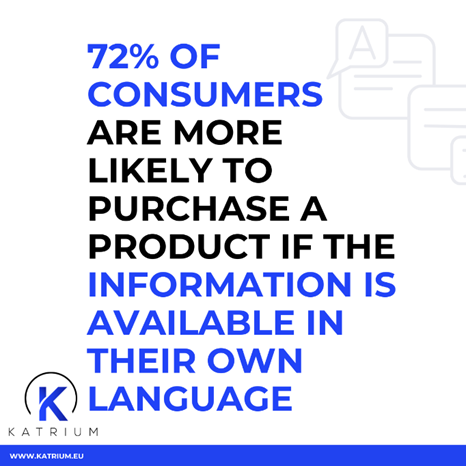
There is a clear link between providing content in the customer’s language and customer trust. CSA research shows that 72.4% of consumers are more likely to purchase a product if the information is available in their own language, and more than half believe that having information in their native language is more important than price.
Linguistic Diversity in Customer Interactions Shows Cultural Closeness
However, linguistic diversity is not limited to interacting with a customer in a particular language. It also involves understanding how that language is lived within a community. In that sense, linguistic diversity is also a form of cultural closeness.
A lot of companies decide to use a “neutral” language to reach a wider audience. This might seem like an effective strategy, but it often comes at the expense of a personal touch. Using neutral, formal, or generic language instead of localizing the content to the communication style of a specific customer group makes it harder to build a genuine connection.
Style matching the person you’re speaking with is crucial because it reduces social distance, promotes a shared sense of identity, and builds greater trust. Meanwhile, a neutral, unadapted linguistic approach may fall short in establishing that connection, even when the language used is technically correct.
For this reason, simply communicating in the customer’s language is not enough. It is also necessary to understand their cultural references, their context, their social dynamics, and even their sense of humor. Real linguistic diversity lies in recognizing that language is more than a system of words, it’s an expression of identity and culture.
At Katrium, this is one of the key patterns we observe in multilingual customer interactions: people respond more openly and confidently when communication reflects their language and their way of expressing themselves.
How to Implement Linguistic Diversity in Customer Interactions
For linguistic diversity to stop being a challenge and become a real tool for improving customer interactions, it is necessary to create experiences that feel local and personal. Here are some ways to achieve this:
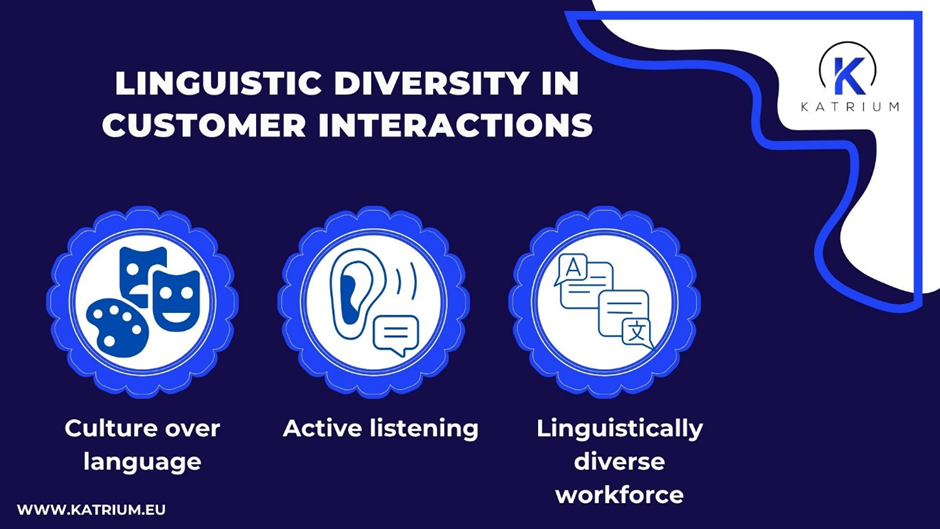
- Prioritize culture over language: To improve interactions with customers, it’s not enough to simply speak their language. You also need to understand the community, its norms, its social dynamics, and the way its members interact with one another.
- Practice active listening: Linguistic diversity isn’t limited to differences in grammar or vocabulary. It also involves listening to how customers express themselves and adapting to the subtle nuances of each community.
- Having a linguistically diverse workforce: Team members who are part of the target audience’s communities, speak their language, and live in their cultural context is essential for building meaningful and authentic interactions.
Katrium understands these strategies because improving customer interactions requires going the extra mile. It’s not just about offering support in various languages, it’s about building genuine connections through multilingual communication that considers each customer’s language, culture, and context.
Conclusion
Linguistic diversity in customer interactions is much more than translating messages or expanding service channels. Rather, it means recognizing that language is a key part of trust and of the way people connect with brands. A company that can communicate in its customers’ language and understand their cultural context will achieve more human interactions and create a bond of trust with its customers.
If your business wants to build stronger connections across markets, linguistic diversity in customer interactions can make a real difference. This is where Katrium helps brands go beyond simply being “multilingual” and instead integrate true linguistic diversity into their interactions with customers, so that every interaction becomes a real opportunity to build connections and trust. Get in touch with our team or learn more about how we support global customer communication through our HR services.