



Human Resources is, to put it bluntly, a fundamental necessity for any business that operates with a significant workforce; any workforce, as a matter of fact. Why? Well, imagine that there’s an incident or two within your workforce. Who would handle it? The boss? Sure, but they’re the boss; their hands are most likely full at any given moment. You need a department to handle the workforce, the way a rancher handles their herds. This is where Human Resources steps in and shepherds the workforce. Perhaps even an outsourced HR provider, like Katrium.
Human Resources vs human resources
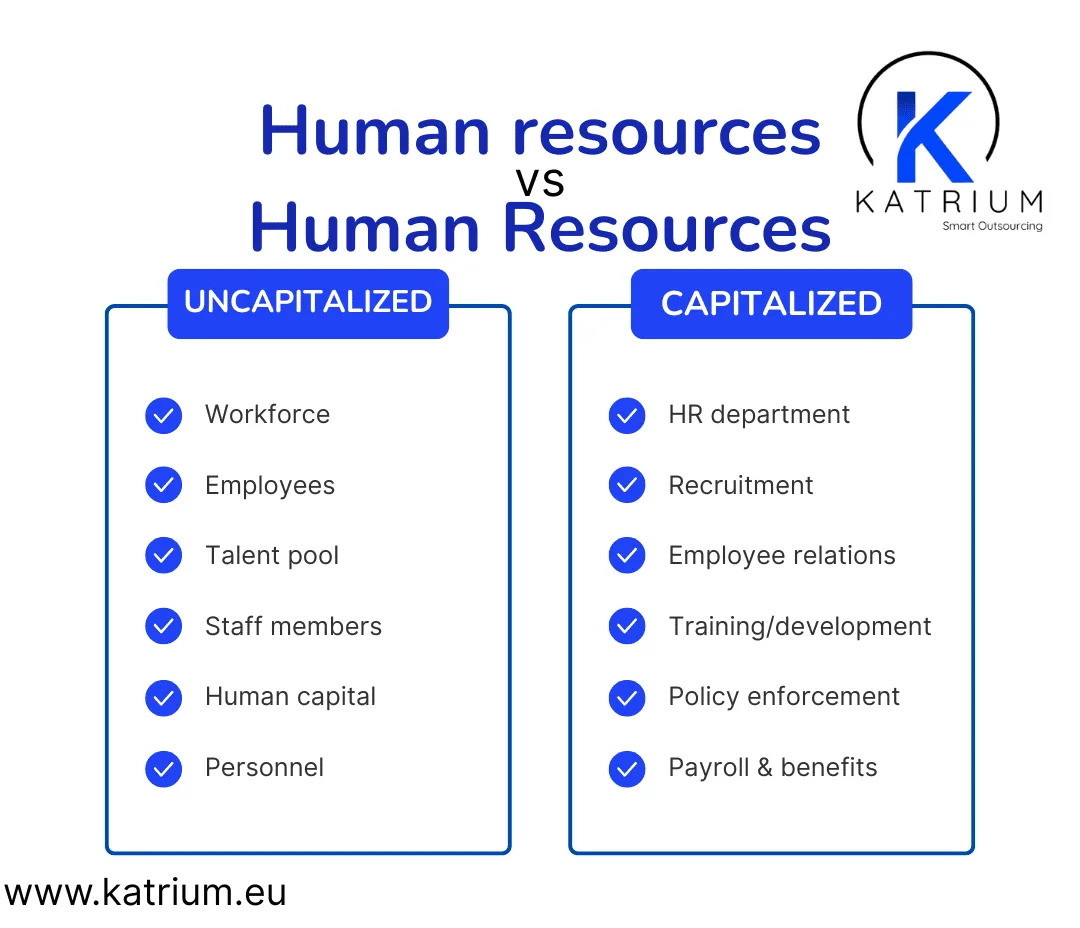
Case sensitivity refers to when there is a clear functional distinction between lowercase and uppercase characters. This is something that needs to be clarified, as “human resources” and “Human Resources” are a case of case sensitivity; they might be the same word, but capitalization makes them two different terms. When discussing “human resources” and “Human Resources,” it’s essential to distinguish between the general and specific meanings these terms can convey. While they appear similar, they serve different functions within an organizational context. So, let’s dissect.
“Human resources” (uncapitalized) refers to the general concept: the people who make up the workforce of an organization, business sector, or economy. It encompasses the employees and their collective skills, talents, and contributions. This term is often used in discussions about labor economics, workforce development, and management strategies. It emphasizes the value and potential of employees as essential assets to any operation.
“Human Resources” (capitalized) refers to the specific department or function within an organization responsible for managing employee-related processes and issues. This includes recruitment, training, benefits administration, performance management, and compliance with labor laws. Often abbreviated as HR, the term represents a formalized department with specific responsibilities and roles designed to ensure organizational efficiency, employee satisfaction, and legal compliance.
Understanding the distinction between “human resources” and “Human Resources” is crucial for effective communication within any organizational setting. While the former focuses on the collective potential of the workforce, the latter deals with the structural and operational aspects of managing this valuable resource. By recognizing these differences, businesses can better allocate their efforts to maximize both strategic and operational efficiency.
But why?
So we understand what Human Resources is, but the question still lingers: why? What’s the point? They are important because they are essential for managing and developing a company’s most valuable asset: its people, while ensuring legal compliance, fostering a positive and productive work culture, and driving strategic business goals. Human Resources professionals handle critical functions like talent acquisition and management, employee relations, benefits administration, and training, all of which contribute to employee satisfaction, retention, and overall organizational success.
Talent Management & Development:
- Recruitment & Onboarding: HR helps attract, hire, and onboard the right talent, ensuring new hires are integrated smoothly into the company.
- Training & Growth: They facilitate training programs and development opportunities to enhance employee skills and support long-term career growth within the organization.
- Performance Management: HR implements systems to manage employee performance, provide feedback, and ensure clear job expectations.
Positive Work Culture & Employee Engagement:
- Culture Shaping: The Human Resources department plays a key role in establishing, reinforcing, and improving the company’s culture to create a supportive and inclusive environment.
- Employee Engagement: By promoting employee satisfaction, motivation, and a sense of belonging, HR contributes to higher levels of productivity and innovation.
- Employee Relations: HR acts as a liaison, providing support, addressing grievances, and mediating conflicts to maintain positive employee relations.
Compliance & Risk Management:
- Legal Adherence: HR ensures the company complies with labor laws and regulations, protecting both the business and its employees from legal risks related to fair pay, discrimination, and harassment.
- Policy Development: They develop and implement fair policies and procedures that govern the workplace.
Strategic Business Support:
- Achieving Business Goals: By effectively managing the workforce, HR directly supports the organization’s strategic objectives and overall success.
- Adaptation to Change: HR professionals are crucial in managing organizational change, helping the company adapt to new market conditions and technological advancements.
- Cost Management: Through strategic management of compensation, benefits, and workforce planning, HR helps control labor costs, which is often a company’s largest expense.

Conclusion: a case for outsourcing
Understanding the significance and importance of human resources, whether it be the general concept or a dedicated HR department, is a necessity when it comes to operating a business of any size. But can small and or medium businesses and startups handle the inevitable costs of running an HR department? It’s highly unlikely. So, how do we solve this?

We at Katrium think that outsourcing HR services is a good choice for any company that may struggle with managing its own. Why?
- Outsourcing HR functions can reduce related expenses by 20-30% compared to maintaining full-time HR staff.
- Outsourced HR grants access to expertise in payroll, labor law compliance, benefits negotiation, and employee relations.
- Scalability in HR support as your business expands or shifts focus.
- All the time your business will save while the outsourcer handles the Human Resources.
Explore Katrium’s full list of HR services, and learn more about what we can offer you. For your HR needs, consider Katrium and contact us today.