
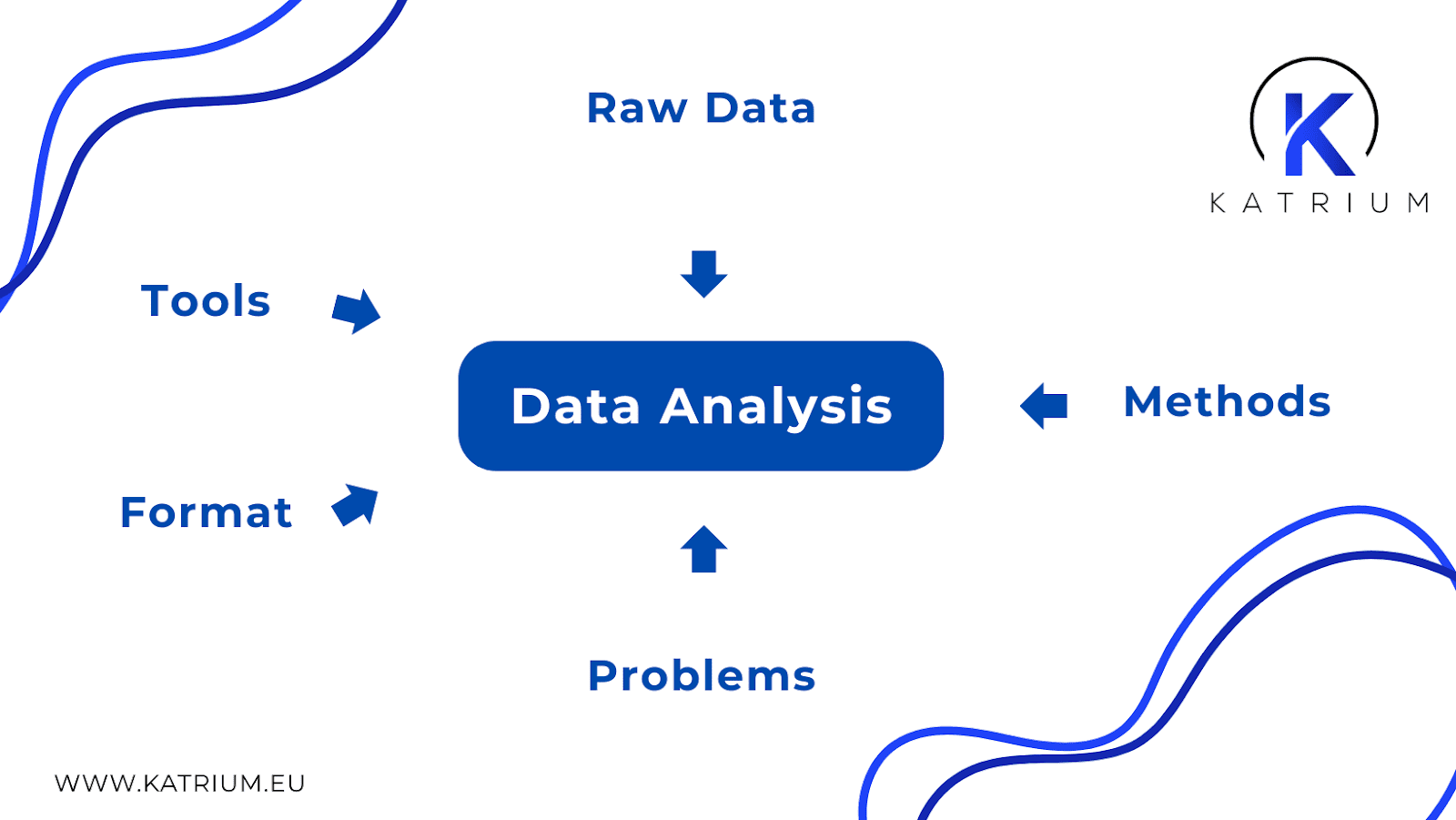
Data Analysis, the key method that enables businesses to operate at a deeper level, has now become the core of every organization. Analysis consists of many different parts within corporations. For instance, finding the performance of products requires data analysis. Analyzing the status of markets requires data analysis. Identifying the correlation between sales and price requires data analysis. They all start with raw data, later transformed into a format we can understand and use to solve problems.
Every part of a business requires data analysis to operate, and we use it to forecast our performance. Katrium manages and analyzes the data within businesses effectively to help our clients produce the best possible outcome.
Data Analysis: What is it?
Data Analysis is the process of gathering and inspecting information systematically. This collection of data is presented in a comprehensible format to gain knowledge and answer questions.
In business, data is crucial for making strategic decisions, solving problems, and gaining deeper insights. Data, patterns, trends, statistics, results, progress, etc, play major roles in forming a collection of information and are used to evaluate decisions.
Essential Steps to Data Analysis
Identify: Identify the problem the company is currently facing.
Collect: Collect raw data or records from the relevant sources.
Clean: The collected data needs to be formatted in a clean state. Remove duplicates, inconsistent results, and all irrelevant data from the problem.
Analyze: Data could be analyzed with various techniques. With the right tools, trends and correlations could be identified in patterns.
Interpret: The analyzed data will answer your question. Conclude the results.
Data Analysis is indeed an effective tool for solving various problems. However, simple raw data on its own isn’t good enough to examine problems. There are commonly accepted elements to gather before maximizing the potential of data analysis.
What are the possible scenarios?
For instance, the collection of data can include the following elements :
- Customer demands and experience
- Product reviews over time
- Competitor’s services
- Sales over time
- Price changes
- Defects and returns
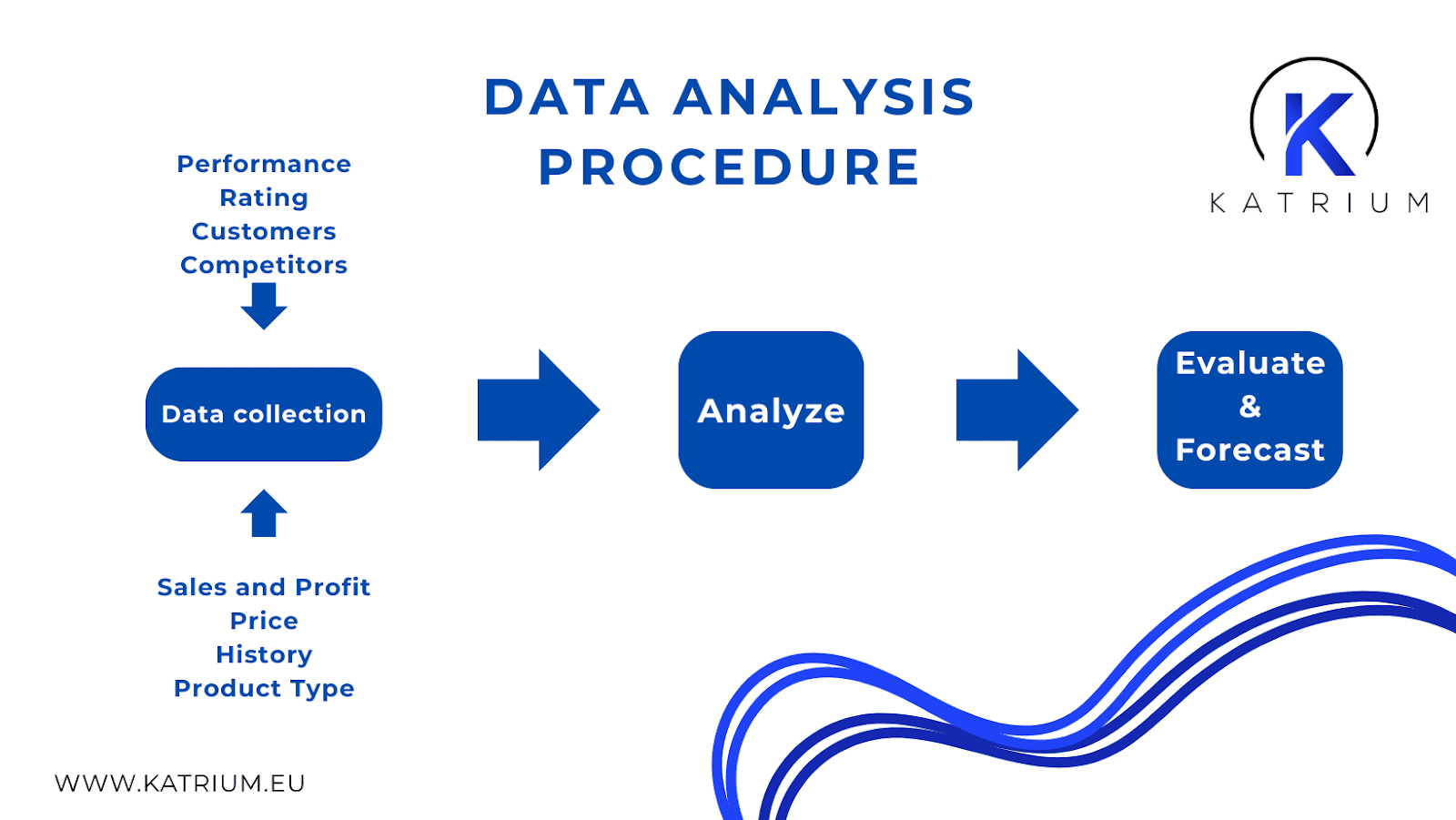
This data needs to be analyzed over time. Meaning, the more data that is gathered, the better the evaluation. Data allows us to examine the current business status, predict future results, and find correlations between each data point to gain better business insight and make plans.
Raw data helps businesses build better insights into markets, such as finding correlations between customer demands and product ratings over time, conducting A/B testing, and seeking improvements. Data collection is not just a simple statistical process; it is utilized in specific ways to identify niches and improve the quality of services.
For example, companies manage their services and constantly keep track of their history. They find out that the number of complaints has increased over time. What do they do?
They identify when criticisms rose, but they don’t just evaluate based on that. Instead, they estimate the outcome by examining multiple data points from the collection, such as price, quality, time, materials, promotion, and more. One possible method is to observe the data for correlations to identify which variables most closely impact the rising criticism.
But it is important to be aware that the analysis requires more variables to give the most accurate estimations.
Which benefits does Katrium provide?
Katrium provides quality data analysis services for clients. We help companies build their own strategies based on analysis. Katrium observes trends, customers, business performance, and variety, and conducts more additional analysis to support better decision making.
Katrium brings benefits to businesses, including :
- Forecasting results based on past outcomes
- Mitigating risks by examining past progress
- Keeping track of customers and their satisfaction.
- Understanding customer interest and preference
- Gaining insight into markets, trends, and competitors’ information
- Comparison performance between past, present, and future
- Increasing business efficiency and reducing costs
The following benefits require constant observation via data analysis, but it also serves as an effective strategy, not only to lead businesses to success, but also to stay ahead of competitors. It is essential to keep track of every set of data from the beginning in order to produce the best forecasting results.
In conclusion
Data analysis has become an essential tool for evaluating the progress of the business model. Analyzing every part of the data, from past to present, helps us gain more accurate insights and build better strategies. Precise handling of data certainly leads to better forecasts of business performance. Recording data will drastically impact business decisions, enabling real-time tracking of needs and has become a standard business tool.
If you have more questions, please visit Katrium for further discussion.