CEFR, or Common European Framework of Reference for Languages, has become a common way of evaluating language skills. Being CEFR-certified at a certain level is an often found job requirement. At Katrium, we go through numerous CVs and applications every week mentioning “English level B2” or “German level C1”. This framework is easy to understand at a glance and provides a solid basis to understanding a person’s language capabilities. But can CEFR truly be used as a be-all and end-all solution to measuring the candidates’ language capability? Is it possible for a CEFR certificate, or the lack of it, to be misguiding?
What CEFR-certified entails
To answer this, first, let us examine what exactly the words “CEFR-certified” mean. It announces the fact that the person took an officially recognised exam. This exam was managed by an affiliated issuing body and was composed according to CEFR standards. There is a high number of the institutions and exams operating within this framework for multiple European languages. In Germany, Goethe-Institut issues documents such as Test DaF. In Spain, the Instituto Cervantes issues DELE diplomas, and for French speakers, you will be looking for a DELF or DALF certificate issued by the French Ministry of National Education.
CEFR-certified levels of language proficiency are starting from A1 and ending at C2. A levels are grouped into Basic user, B levels mean Independent user, and C levels are marked as Proficient user. However, this description has been criticized for being too simplistic. Currently, reference level descriptions for individual languages are being developed to address that.
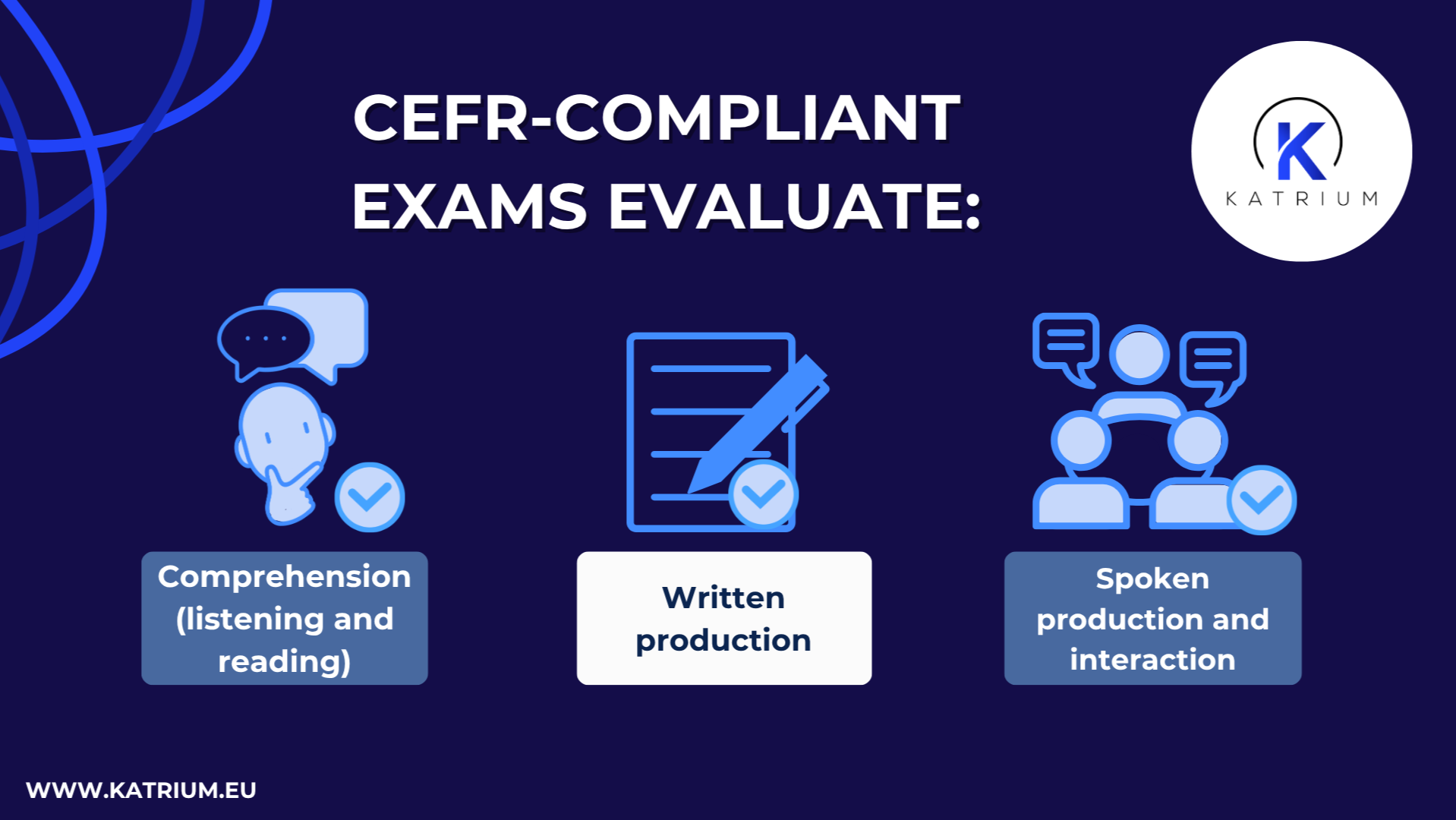
The exams are all structured in a similar manner. They test reception (listening and reading), written production, spoken production and interaction. With the standardised approach, they aim to evaluate the learners fairly, and then give an overall grade. The final grade is based on the average of separate skills.
What CEFR-certified does not guarantee
The first thing important to understand about CEFR scores is that they are, by definition, an average. While it is possible to request the breakdown of the score by category, oftentimes the lone “B1” is where it begins and ends. The person might be a fluent speaker, but struggle with spelling, or they may be writing complex texts but still lagging behind in a conversation. And both of them would still get the same CEFR-certified average score!
There is a clear difference from the HR perspective, though. It is a great idea to hire the second one for a text translator job, while the first one can help the company reap the benefits of multilingual telemarketing. This is one of the reasons why Katrium’s logs keep the information on what position the person was considered for – a translator and an interviewer may have the same language level, but different skill sets.
Standardization is also one of the problems. With many courses available specifically to prepare for a CEFR-compliant exam, it is possible to fall into routine. Learning specific topics, exercises and structures needed to become CEFR-certified, but falling short outside of these is easy. This can be especially relevant in professional settings where lots of specific vocabulary is needed. Having a good level overall does not guarantee the person being prepared for the particular scenarios a job may consist of.
Another thing to keep in mind is the validity period. While some of the certificates discussed earlier have a clear expiration date, others, like Test DaF for example, are valid indefinitely. Whether the person has been keeping their language level up or has not spoken it for years, they can still claim to be CEFR-certified – because technically, they are. It is convenient for the language users to not constantly reconfirm their skill, but this makes the fact of certification alone less reliable.

The last point is that, while certification does not always guarantee proficiency, the lack of a particular certificate doesn’t always mean the lack of it, either. People may study diligently and obtain the equivalent language level. But getting a certificate to officially call yourself CEFR-certified may not always be as simple. This can be due to both financial (CEFR-affiliated exams are usually expensive to take) and geographical (the lack of local testing option) barriers.
What does this mean from a company perspective?
These details mean that a lot more goes into evaluating a candidate’s language capabilities. It is important to look beyond the average CEFR-certified test result. Instead, assess the person’s job-specific competences, such as cultural awareness, ability to keep talking under pressure, or professional written communication. For example, a call centre role does not call for a sufficient exam score alone, but the ability to react and respond quickly, to speak clearly and intelligibly. This is why, at Katrium, we always prefer to communicate with prospective employees directly, as it helps in noticing the nuance that a standardized CV is unable to communicate.
One helpful aspect when hiring multilingual professionals can be multilingual HR services. An HR speaking a different language can be valuable in evaluating the applicant’s language proficiency and suitability. They can make it easier to select the right person for the job. Smoother onboarding and clearer internal communication are some of the other benefits of multilingual HR.
Final thoughts.
The main takeaway is, even CEFR-certified, the indicated language level alone is not always sufficient. While it can provide a solid first step, the details one doesn’t see from the score can make or break the professional. Looking at the full picture instead of focusing on a specific letter and number will result in a better picture of the applicant and so, better hiring decisions. If you need help with hiring international multilingual talent, contact Katrium! We can help you navigate the recruitment processes to find the skilled candidates without worry.