





Business support process is an essential foundation for sustainable growth and reliable operations. While customer-facing activities often receive the most attention, the internal functions—such as HR, finance, IT, and procurement—are what keep daily work running effectively. If these processes are fragmented or inefficient, they can waste resources, increase compliance risks, and make it harder for an organisation to grow.
In this Katrium article, we explain what a business support process is, why it matters, and how organisations can design and implement it effectively.
What is Business Support Process?
A business support process refers to the set of structured workflows, tools, and practices that enable an organisation to handle essential internal operations effectively. These processes ensure that employees have what they need to do their jobs, that compliance requirements are met, and that resources are used wisely. Whether you are a growing start-up or an established enterprise, investing in robust support processes can unlock significant performance gains.
Why Business Support Process Matters?
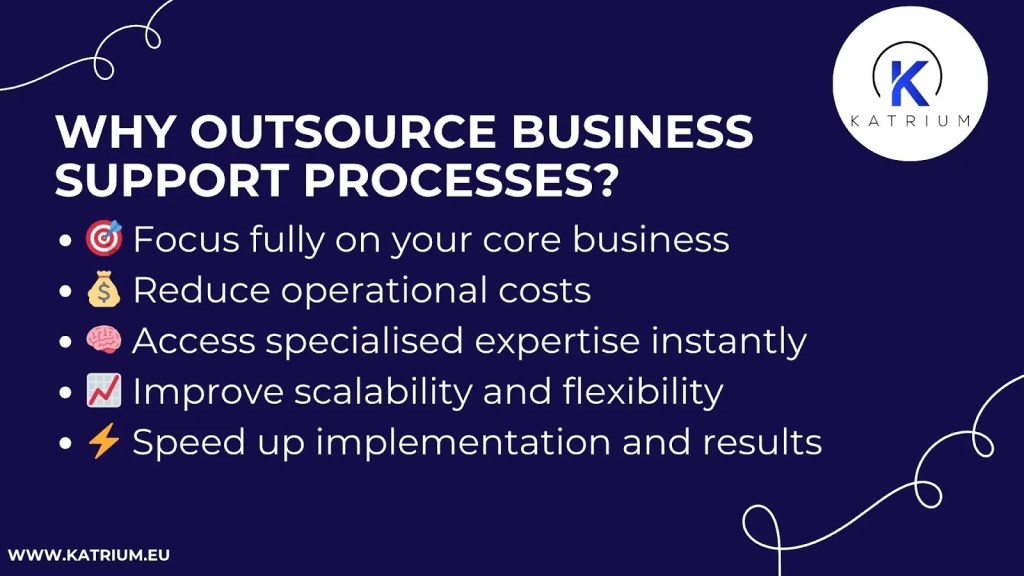
A well-designed business support process has multiple advantages. Here are a few of them:
- Efficiency: Standardising tasks reduces duplication and saves time.
- Compliance: Clear procedures help meet regulatory and legal obligations.
- Scalability: Well-designed workflows can grow along with your business.
- Cost Control: Automation and shared services lower operating expenses.
- Employee Experience: Reliable support processes free employees to focus on higher-value work.
For example, an automated onboarding process in HR can ensure that new hires receive access to systems and training without delays. Similarly, a well-defined procurement process can reduce errors and speed up purchasing cycles. To achieve these results, Katrium’s experts work closely with your organisation to design support processes tailored to your specific needs.
The Key Stages of a Business Support Process
Implementing an effective business support process typically follows these steps:
- Plan & Scope:
The first stage involves defining which areas need support. This could include finance, HR, IT, or procurement. Tools like a SIPOC diagram (Suppliers, Inputs, Process, Outputs, Customers) help map out all stakeholders and clarify the scope. - Design & Map Workflows:
Once the scope is clear, workflows are designed using diagrams such as BPMN or swim-lane charts. These visual tools highlight responsibilities, hand-offs, and dependencies, reducing confusion and inefficiencies. Setting measurable KPIs – like cycle times and error rates – establishes clear performance expectations. - Model, Test, & Pilot:
Before full implementation, it’s critical to simulate different scenarios. Pilots allow organisations to test the process under real conditions, adjusting staffing levels or timelines as needed. - Execute & Monitor:
The process is launched, either manually or through dedicated technology platforms. Real-time dashboards and reporting tools help monitor compliance and performance, making it easier to spot bottlenecks early. - Optimise & Evolve:
A business support process should never be static. Continuous improvement practices such as Kaizen or Six Sigma help refine workflows over time. By analysing performance data, organisations can identify further opportunities to streamline operations and digitise tasks.
The Role of Automation and Shared Services
Modern organisations often leverage automation and shared services to improve their support processes. Automation tools can handle repetitive tasks like invoice processing or employee data updates, reducing errors and freeing up time for more strategic work. Shared service centres consolidate support activities across departments or business units, offering economies of scale and consistent service levels.
McKinsey research has shown that digitising core processes can improve efficiency by up to 50%. This makes investing in digital tools and continuous process improvement an attractive proposition for any growth-focused organisation.

Summary
A good business support process helps maintain stability, control costs, and remain agile. Whether you are streamlining HR, automating finance, or improving IT workflows, a clear and structured approach will lay the foundation for lasting success.
At Katrium, we have refined the business support process framework through years of experience and are ready to help you implement it efficiently in your organisation. Explore our service portfolio and contact us to create a customised business support process that lets you focus fully on growing your business.