





Brand Research is the key to understanding what people truly think and feel about your business, products, and your market identity.
In a world of endless choices, building a strong brand is more crucial than ever. Brand Research helps you stand out from the crowd by identifying what your customers value, where your brand fits in the market, and how it can grow. With data-driven insights, businesses can make better decisions, strengthen customer relationships, and create long-term value.
Brand Research and Its Importance
Brand Research refers to the structured process of collecting and analyzing data about a brand’s image, visibility, customer loyalty, and market position. It includes both quantitative and qualitative research methods, like surveys, interviews, focus groups, and data analysis. The goal is to gain an in-depth understanding of how a brand is perceived by its audience.
At Katrium, smart decisions start with accurate data. That’s why Brand Research plays such a central role in every strategy we develop for our clients.
Here are the main areas that Brand Research covers:
- Brand Awareness: Are people aware that your brand exists?
- Brand Association: What feelings and ideas do people connect to your brand?
- Brand Positioning: How does your brand compare to competitors?
- Brand Loyalty: Do customers come back again and again?
- Brand Equity: What is the long-term value of your brand?
Understanding these aspects helps businesses deliver consistent messaging, build trust, and meet customer expectations more effectively.
Types of Brand Research Methods
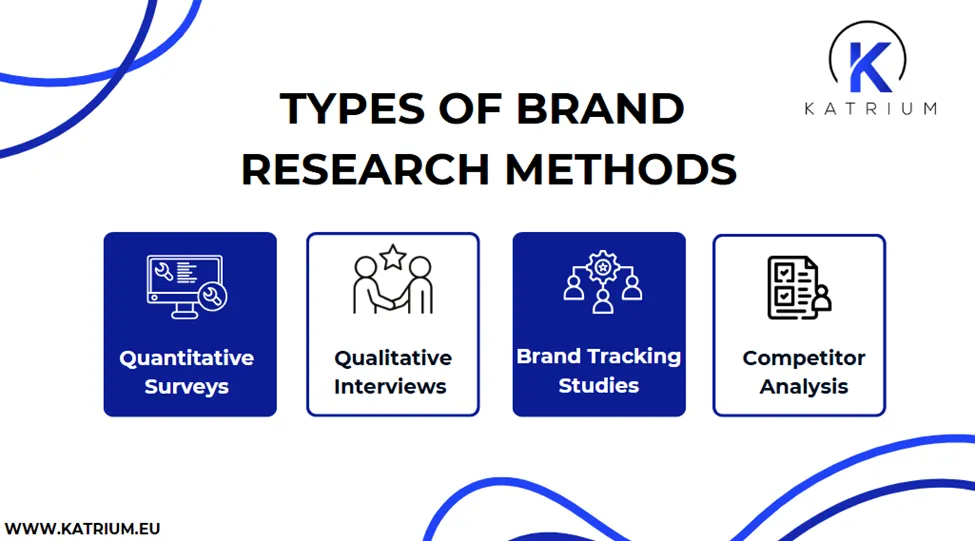
There are different ways to carry out Brand Research, depending on your business goals and the type of insight you need. Here are the most common methods used:
1. Quantitative Surveys
This method collects structured responses from a large group of people. It’s useful for measuring brand awareness, customer satisfaction, or product recall.
2. Qualitative Interviews and Focus Groups
These techniques provide deeper insight into people’s attitudes, opinions, and emotional connections to your brand.
3. Brand Tracking Studies
These are repeated surveys over time that help track brand performance metrics like awareness, preference, and reputation.
4. Competitor Analysis
A detailed comparison of your brand’s performance and perception versus others in the same industry.
5. Emotional Branding Analysis
Understanding emotional connections can help a brand stand out. Read more on emotional branding.
6. Social Listening Tools
Monitoring conversations on social media to learn what customers say about your brand in real time.
At Katrium, our experts use a combination of these tools to provide a 360-degree view of your brand. Our market research services are tailored to meet the needs of clients in various industries and regions.
When Should You Conduct Brand Research?
Brand Research isn’t just for big companies. Whether you’re launching a startup or rebranding an existing business, there are several times when conducting research becomes essential:
- Before entering a new market
- When launching a new product
- During or after a rebranding process
- If sales or engagement are dropping
- To evaluate the effectiveness of marketing campaigns
Doing Brand Research early helps avoid costly mistakes and ensures you are reaching the right audience with the right message.
Benefits of Brand Research
1. Strategic Decision-Making
The biggest advantage of Brand Research is that it enables informed decisions. Whether it’s product development, marketing messaging, or customer experience design, you’ll be guided by real data instead of guesswork.
2. Improved Customer Loyalty
When you understand what your customers value, you can deliver products and services that keep them coming back. According to a report from Edelman, 81% of consumers must trust a brand to buy from it.
3. Better Market Positioning
Understanding your strengths and weaknesses helps position your brand more effectively. For instance, if people see your brand as innovative but expensive, you can adjust pricing or emphasize value in your messaging.
4. Higher ROI on Marketing Campaigns
Knowing what messages resonate with your audience means fewer failed campaigns and higher returns.
5. Stronger Internal Alignment
Brand Research also helps internal teams align around a shared vision and strategy. Marketing, sales, product, and customer service can work together using the same brand language.
How to Conduct a Brand Research Project
If you’re ready to get started with Brand Research, follow this step-by-step approach:
Step 1: Define Your Research Goals
What are you trying to learn? Do you want to increase awareness, change perception, or enter a new market?
Step 2: Identify Your Audience
Segment your audience by age, income, behavior, geography, etc. Understanding different customer personas is critical.
Step 3: Select the Right Tools
Use surveys for measuring awareness and loyalty, interviews for emotional feedback, and tracking tools for long-term trends.
Step 4: Collect and Analyze Data
Use both qualitative and quantitative data. Look for trends, common themes, gaps, and opportunities.
Step 5: Act on Insights
Apply what you’ve learned. Update your brand strategy, redesign campaigns, or launch new features based on findings.
Step 6: Monitor and Refine
Brand performance should be monitored continuously. Set key performance indicators (KPIs) and review progress regularly.
Want more tips on surveys? Read Katrium’s research guide for practical advice.
Real-World Application of Brand Research
Let’s look at an example. Suppose a fashion startup wants to enter a European market. With Brand Research, they discover:
- Young adults associate the brand with sustainability (a strength)
- Many potential buyers are unaware of the brand (a gap)
- Customers prefer ethical sourcing over lower prices (a trend)
Armed with this information, the startup can develop focused ad campaigns that highlight sustainability, build partnerships with eco-influencers, and avoid discount strategies that dilute their brand equity.
This is the kind of strategic outcome that Katrium helps clients achieve every day across multiple sectors.
Internal and External Brand Alignment
Brand Research isn’t just about customers. It’s also about how employees and stakeholders view the brand. Internal branding matters as much as external marketing.
If employees don’t understand the brand’s mission or voice, the customer experience suffers. Regular internal surveys and culture audits ensure alignment between what a brand promises and what it delivers.
Conclusion
In conclusion, Brand Research is essential to building, managing, and growing a successful business. It offers clear direction, saves money, and strengthens customer loyalty. Most importantly, it allows brands to stay relevant in an ever-changing marketplace.
We at Katrium are proud to offer tailored Brand Research solutions to companies across Europe and beyond. Contact us, whether you’re a startup or a global brand; our experts can help you turn insights into real-world impact.With the right Brand Research, you don’t just follow trends—you set them. And that’s the power of knowing your brand inside and out.