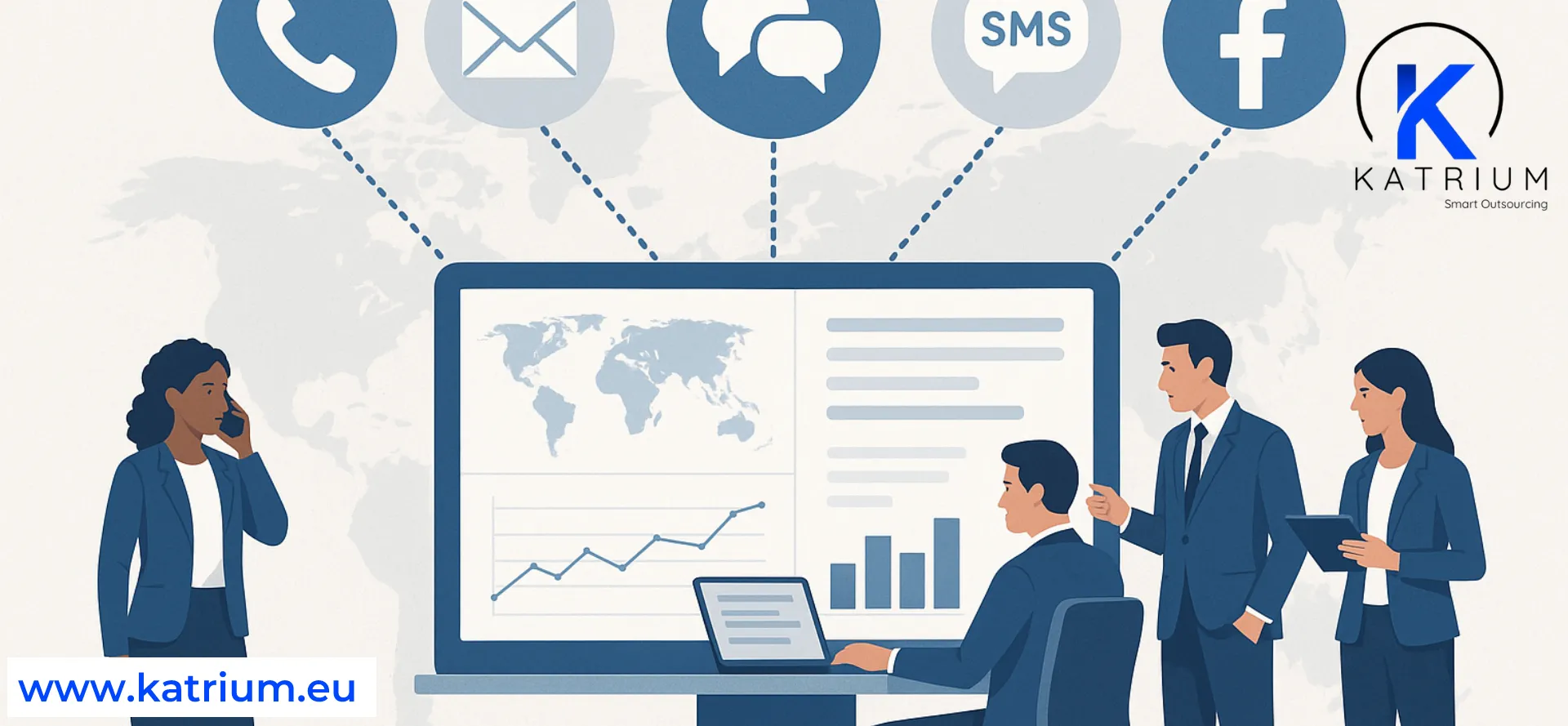



A multi-channel contact center allows customers to connect with a company through phone, email, live chat, SMS, and social media. Using several channels makes it easier for customers to choose the option that best suits them, and it helps companies answer requests faster and more consistently. Katrium provides multilingual contact center services across all main communication channels, giving clients continuous availability for both local and international operations.
In this article, we will help you understand what a multi-channel contact center is, why it can be beneficial for your business, and what you should consider when implementing one.
What is a multi-channel contact center?
In a multi-channel contact center, each communication channel operates in its own stream. Phone calls, emails, and social media messages are handled separately but managed from one platform. This is different from an omnichannel system, where customer history is shared across channels. Katrium supports both approaches, offering 24/7 customer interaction in more than 20 languages.
Key benefits of multi-channel contact centers
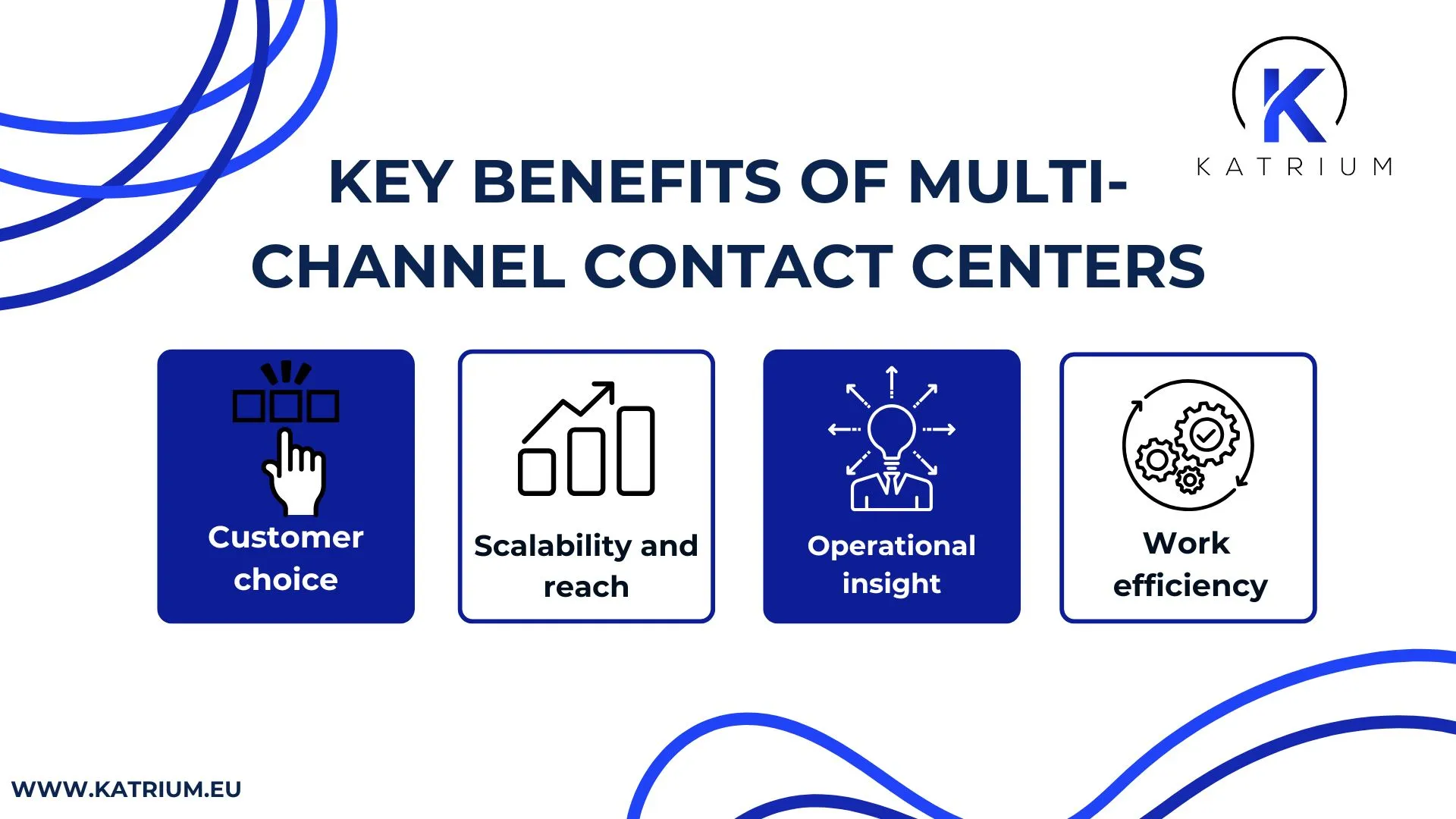
Customer choice
A multi-channel contact center gives customers the freedom to select the channel that fits their needs, whether it’s quick live chat support or detailed email follow-ups. The ability to choose a preferred communications platform builds trust and satisfaction between the business and the customer, driving positive interactions.
Scalability and reach
Remote teams and multilingual staff make it possible to serve international customers at any time. Outsourcing these solutions also allows for on-demand scalability. Katrium’s contact center services help clients expand into new markets without building local teams from scratch.
Operational insight
Performance data from a multi-channel contact center shows which channels customers prefer and when service demand peaks. This allows for preparation, making it easier to allocate staff and resources to the right channels.
Work efficiency
Agents in a multi-channel contact center handle requests in a unified dashboard, reducing time spent switching between tools. Automated functions such as call routing and chatbots resolve routine inquiries.
How to build a multi-channel contact center
- Start a multi-channel contact center with three to four key channels and expand as demand grows.
- Train agents to manage each channel with consistent service standards.
- Gather customer feedback regularly to identify preferred channels.
- Track customer journeys to understand context and avoid repeated questions.
- Use automation tools like chatbots or IVR to handle simple tasks, and apply reporting dashboards to monitor performance.
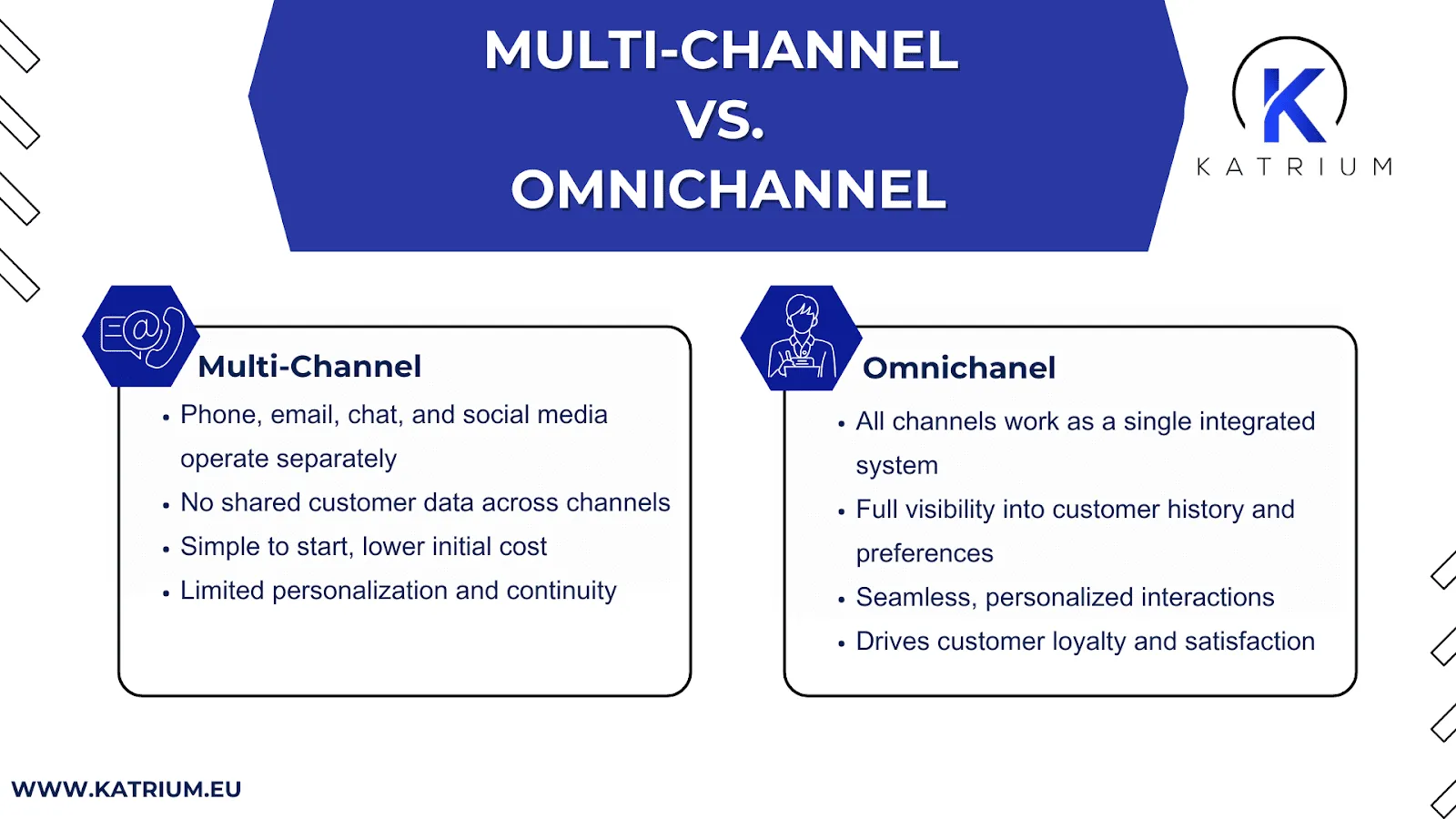
Multi-channel vs. Omnichannel
A multi-channel contact center lets companies reach customers on several platforms, but does not automatically combine data across them. Omnichannel systems integrate customer history into one view, supporting fully personalized services. Katrium helps clients choose the right model depending on their goals and budget, and can transition a project from a multi-channel contact center to an omnichannel solution if required.
Conclusion
A multi-channel contact center improves accessibility, reduces response times, and supports global business growth. Katrium delivers these services through multilingual teams, automation tools, and ongoing analytics. Contact us today, and together we at Katrium can help you set up a strategy tailored for your company.

