




International data collection is becoming essential for companies and researchers working across borders. Businesses use it to understand new markets and customers, and researchers rely on it to compare insights from different countries. In today’s connected world, making decisions based solely on local data often misses the big picture.
At the same time, collecting data worldwide isn’t always straightforward. Different laws and cultures can quickly turn a simple project into a challenging one. This article explains why collecting data from around the world is important and how to do it well despite the challenges.
What is international data collection?
Put simply, international data collection means gathering and analyzing information from more than one country. It could come from consumer surveys or web analytics or mobile app usage, or large-scale research projects.
A survey that works well in Europe might confuse people in Asia if it is not adapted carefully. Global research isn’t just about translating words. It’s about making sure the data is meaningful and comparable everywhere. Even small differences in wording or answer choices can change the results a lot.
Why is it more important than ever?
- There are a few big reasons why international data collection has become so important.
- Businesses can spot new market opportunities and adapt products to different regions.
- The government can benchmark progress across countries and identify where resources are most needed.
- Researchers get to test ideas on a global scale, not just in one cultural bubble.
At Katrium, we know that solid international data gives our clients a real edge. It’s the difference between guessing and knowing.
Common Challenges in International Data Collection
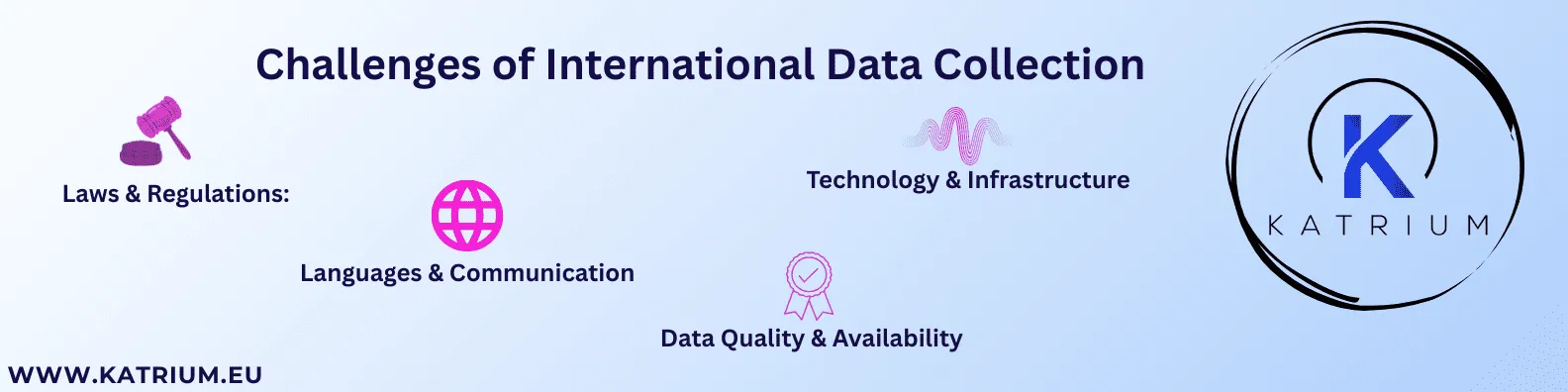
Collecting data across borders brings unique challenges:
Legal and Regulatory Compliance
Every country has its own rules for handling data. For example, the General Data Protection Regulation (GDPR) in the EU sets strict guidelines for collecting and processing data. Organizations need to follow the rules to avoid fines or legal trouble.
Language and Cultural Barriers
If questions are translated word-for-word, they can be misunderstood. Cultural habits also shape how people answer. That’s why it’s important to adapt surveys to local languages and contexts for accurate results.
Technological Limitations Data Quality and Availability
Some regions may have limited internet access or outdated technology, which can affect survey participation or data collection quality. Alternative methods or offline tools may be needed.
Data Quality and Availability
The quality and availability of information can vary significantly. Some countries may not have reliable official statistics, or the existing data might be collected using different methods, making it difficult to compare. To ensure accurate analysis, researchers must establish strict data validation procedures and sometimes resort to collecting primary data where reliable secondary sources are either limited or inconsistent.
Best Practices for Effective International Data Collection
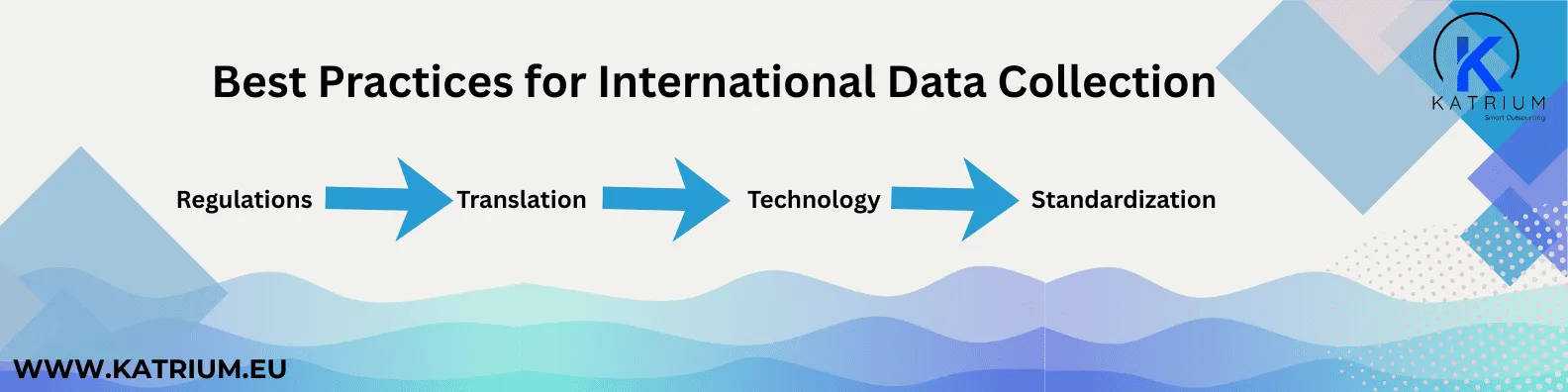
When collecting data internationally, it is essential to understand local regulations before starting.Research each country’s data protection laws to ensure compliance, and for a global overview, resources like the Data Protection Laws of the World guide can be very helpful. Using professional translation services is equally important, as Certified translators ensure that survey questions and materials retain their intended meaning and reduce the risk of misinterpretation. Finally, applying uniform methods for collecting and analyzing data across regions keeps results consistent and trustworthy.
How Katrium Can Help
At Katrium, we turn the complexity of international data collection into something manageable and meaningful. Our research services don’t just gather data. We transform information into clear insights that guide next steps.
Our team also supports clients with content production services and creates reports, surveys, and data collection tools that meet local and international standards.
To succeed in international data collection, it’s essential to plan carefully, choose the right tools, and leverage local knowledge. Katrium supports your efforts every step of the way, helping you transform raw data into insight that guides strategic decisions. Our experience working across diverse markets allows us to anticipate challenges, adapt research, and high quilt results every time. By understanding the local context, we help you collect not only accurate but also meaningful data so your business can make confident, informed decisions across borders.
Conclusion
International data collection is complex, but it is also one of the most valuable tools for understanding today’s interconnected world. With the right approach and a trusted partner like Katrium, you can transform complex global data into clear impact. Don’t let barriers stop you. Every market and customer has valuable insights if you know how to find them.
The world is moving faster than ever, and those who use international data effectively will lead the way. Take control of your global research, make smarter decisions, and turn information into results that truly matter.
Turn international data into smarter decisions. Contact us and let Katrium help you succeed on a global scale!